
Heart Work / Rewriting a Literacy Crisis / What Reading Comprehension Is Really About
with Natalie Wexler
01/22/2025 | 8 minutes
When education writer Natalie Wexler published The Knowledge Gap five years ago, she didn’t expect it to fundamentally change how teachers and administrators thought about literacy. Yet, across the country, her work has become a touchstone for educators navigating the shift toward knowledge building and the science of reading.
In this interview, Wexler discusses how the science of reading became a national focus, why reading comprehension depends on knowledge, and what it takes to embrace meaningful change.
This interview has been edited for length and clarity.
Though science of reading research has been accumulating for decades across linguistics, cognitive science, and education, the term itself has only recently entered the public conversation in a significant way. Today, it feels almost inescapable, with debate over how to teach reading showing no signs of slowing down, even within the science of reading community.
Wexler reflects on how that shift took shape — and why clarity about the term still matters.
Lauren Keeling (host): The term “science of reading” has become much more familiar over the past five years — why do you think that is?
Natalie Wexler: It’s not a term I had heard when I was writing The Knowledge Gap or even when it was published, so it really has been in the last five years or so. The work of Emily Hanford, the audio journalist who did Sold a Story, had a lot to do with it. She’s done a tremendous service in pointing out ways in which typical reading instruction conflicts with what science tells us is likely to work.
My reservation is that the term “science of reading” has often come to be defined as just phonics, and it’s way more complicated than that. There’s a lot of scientific evidence related to reading comprehension that should be included but often gets left out. There are ways in which the standard approach to teaching reading comprehension also conflicts fairly dramatically with what science tells us.
Lauren: What role does background knowledge play in reading comprehension, according to cognitive science?
Natalie: There’s a lot of undisputed evidence that having knowledge of the topic you’re reading about is really helpful to comprehension. Beyond that, the more general knowledge and vocabulary you have, the easier it is to understand just about anything you try to read.
It’s difficult to get evidence that building kids’ knowledge boosts their general reading comprehension, because we measure with standardized tests that use passages unrelated to specific topics taught. Evidence shows that if you teach different topics and build vocabulary and knowledge, eventually scores on general comprehension tests improve — but that can take three years or more. Few studies last that long.
Based on what cognitive science tells us about the importance of knowledge, we don’t need to wait for mountains of experimental evidence to switch to building kids’ knowledge.
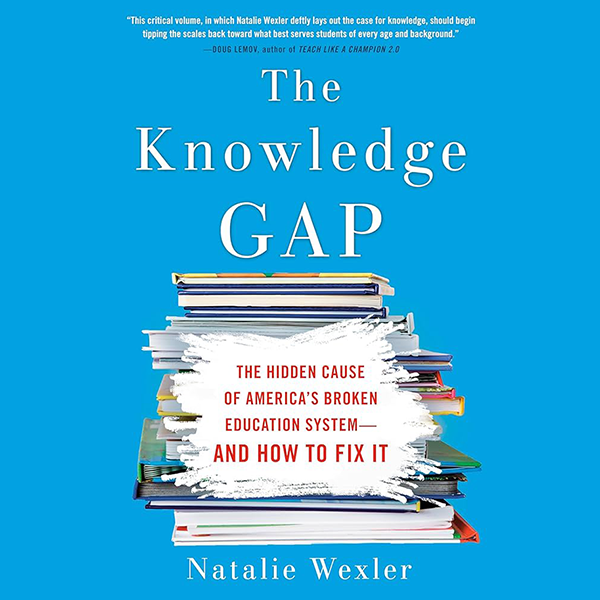

Featured: The Knowledge Gap by Natalie Wexler and Sold a Story by Emily Hanford
Lauren: How did you come to identify “the knowledge gap” as critical?
Natalie: I’d been writing about education for years and thought I knew a lot. I had talked to experts and read a lot of books, but no one had mentioned that we weren’t really trying to build kids’ knowledge at the elementary level. People said we made progress in elementary school, but everything fell apart in high school.
I volunteered to tutor writing at a fairly high-poverty high school. One thing I noticed was, if I asked students to read what I thought was a straightforward text, they could read it, but they could not understand it because they were missing some background knowledge. For example, I gave some 10th-grade students a piece to read on the Supreme Court, and none of them knew what it was, even though we were 17 blocks away.
Later, I met Judith Hochman and thought her writing method was what kids needed because it teaches writing and deepens content knowledge. I was on the board of a charter school. I thought, wouldn’t it be great if they could use this method of writing instruction? But she came back to me and said, “Well, the problem is this method of writing instruction only works if it’s embedded in content, and your school isn’t really teaching any content.”
That really opened the door. I realized this was bigger than one school or city. We were trying to teach abstract comprehension skills, like making inferences as if they could be mastered in the abstract and applied to any text, but that’s not how comprehension works.
It is a systemic problem, and I think that teachers are as much the victims of this system as students have been. It’s very painful to acknowledge that what you were doing when you thought you were helping kids maybe wasn’t helping them.
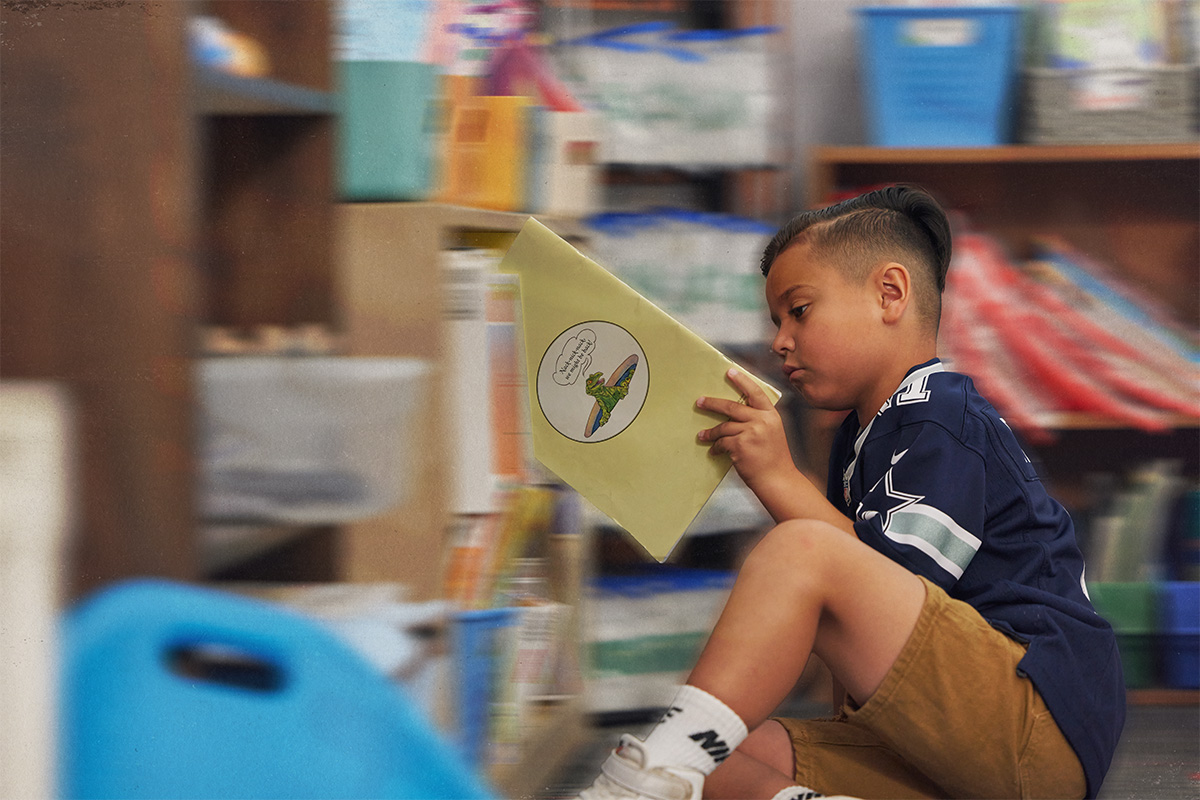
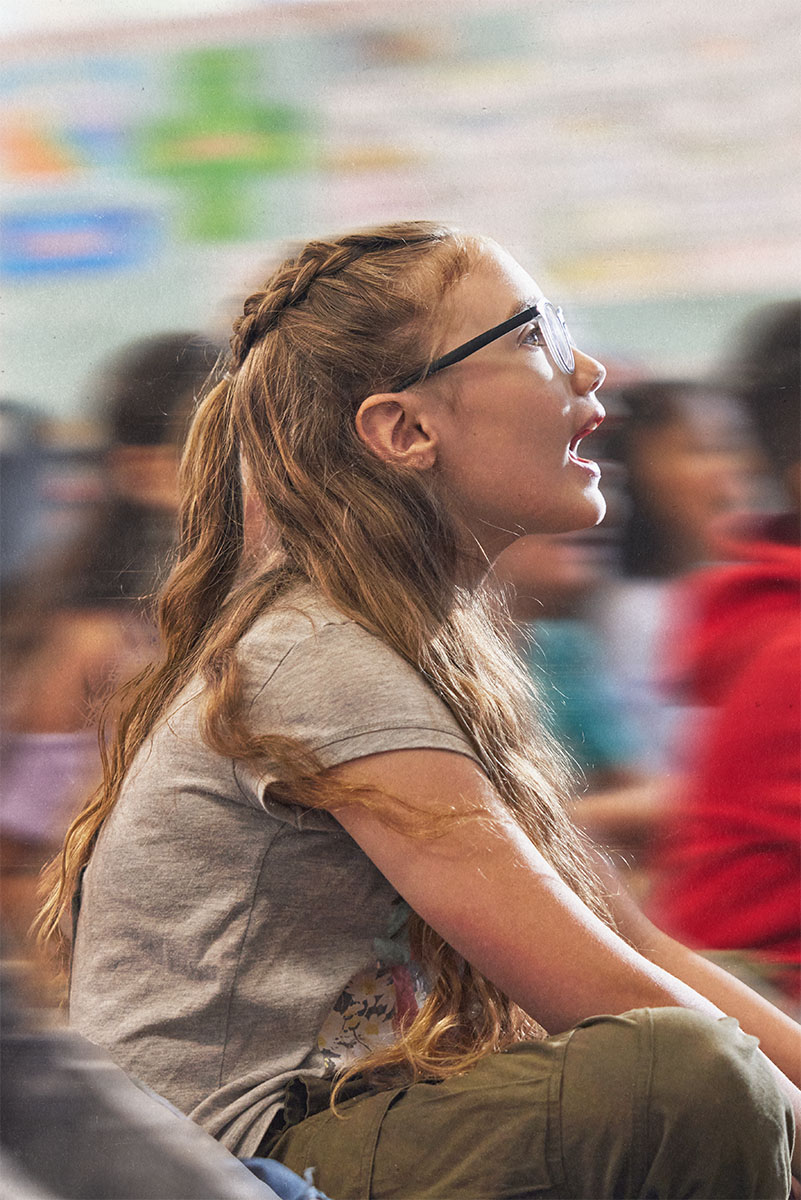
Students engage in independent reading, whole-group instruction, book exploration, and even song, reflecting the many ways literacy can take shape in the classroom.
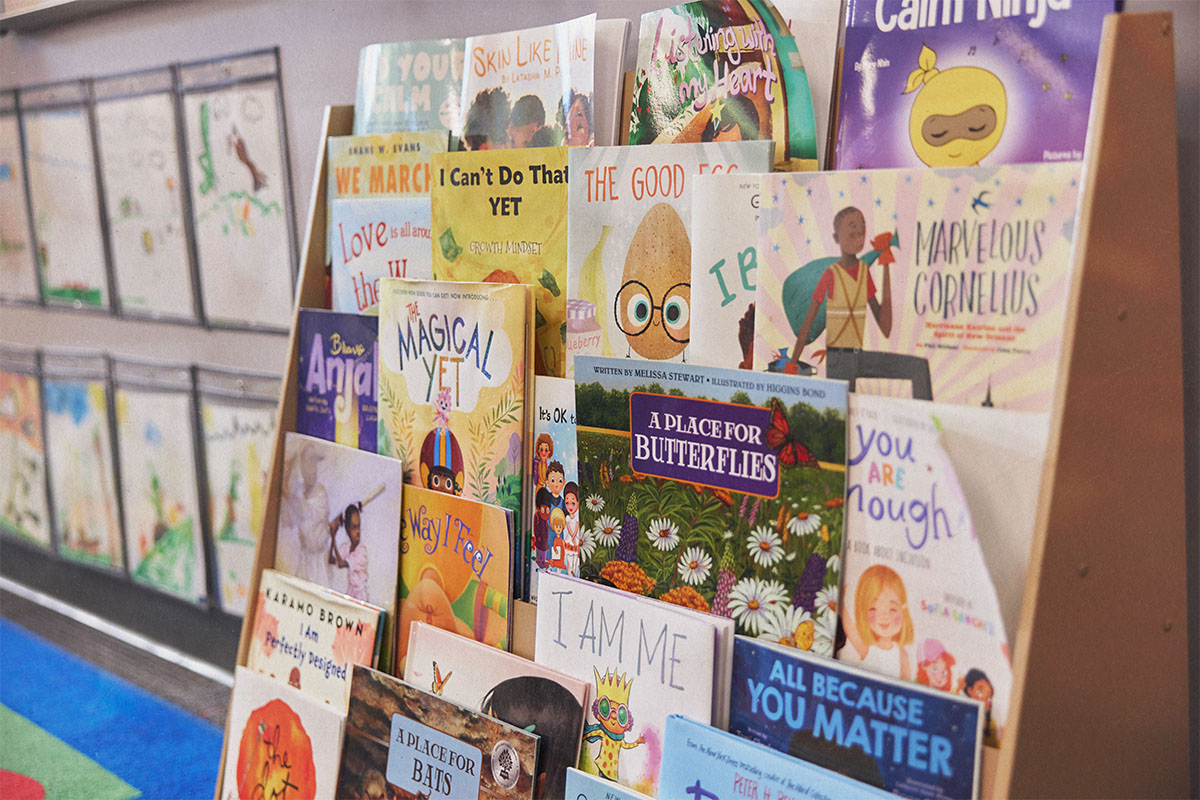
Lauren: I remember talking to my district’s leaders and have since listened to other districts’ leaders and teachers, and oftentimes the story comes back to phonics. They understand skill development, but often the challenge is finding the balance between foundational skills and knowledge building. How would you talk to teachers and administrators about that struggle?
Natalie: I use the image of two train tracks that eventually converge. For a while, foundational skills — decoding and word recognition — are on a different track from knowledge development. Early on, kids won’t acquire most knowledge through their own reading; it will be through oral language — listening to books read aloud and discussing them, and using the vocabulary from those books so it transfers to long-term memory.
Eventually, when their foundational skills catch up, that background knowledge will kick in and enable them to read independently about a range of topics.
I think we’ve been relying on the idea that if kids just keep reading on their own, they’ll eventually get to a point where they can read independently about all sorts of things. But for most kids, that isn’t the case. That’s why read-alouds in kindergarten, first grade, and second grade are so important. We know that listening comprehension exceeds children’s reading comprehension until, on average, around age 13.
A young child who can’t yet read can still follow a story that’s being read to them. That’s why we need to get them hooked on reading through expressive read-alouds — saying things like, “Let’s talk about this,” “Isn’t this exciting?” “What’s going to happen next?” We’ve been giving kids excerpts and using them as a means to an end for teaching comprehension skills, which turns reading into a task. But there’s another way to approach reading, and it’s fun.
I’ve been in classrooms where students don’t want their teacher to stop reading, and they still have more to say when it’s time for the discussion to end, where there’s an excitement in the air through shared read-alouds and discussion. And that excitement is just as much a part of teaching reading as phonemic awareness, phonics, and all the other things that also need to be taught.
Lauren: I love that. It makes me think of that Kate DiCamillo quote, um, where she says something like reading shouldn’t be presented to children as a chore, but instead as a gift, and I think we’ve lost a little bit of that over time. Can you speak to the value of that reading and reading an entire book over just a snippet?
Natalie: I’ve been thinking a lot about this. Nonfiction is one thing, because a whole book can go into much more depth about one thing, but you can also get that through a series of shorter texts. But when it comes to fiction, the excitement and the joy are going to come much more effectively if you spend more time in that world. There is evidence that fiction helps develop empathy, and I think that’s because of that transportation into other worlds and other people’s shoes, and I believe only novels can supply that experience.

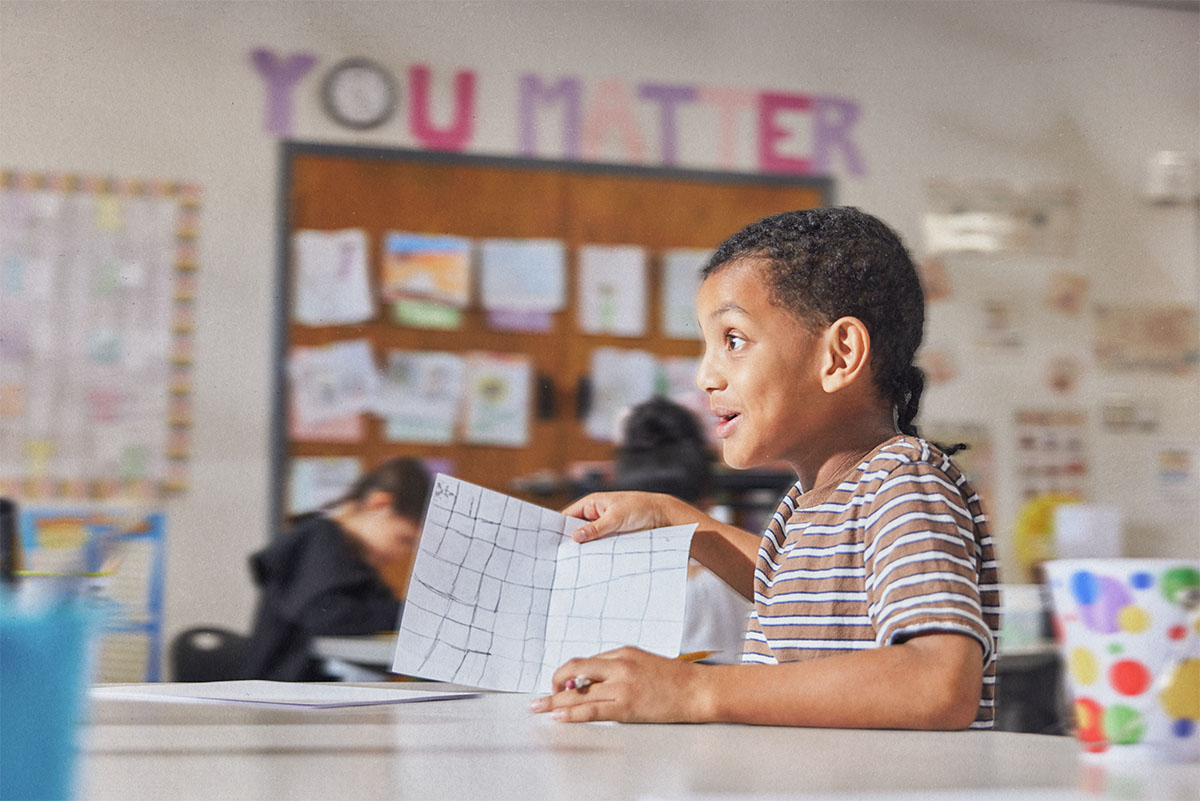
In Pendergast, students move between classroom work and outdoor exploration during the school day.
Lauren: Earlier, you talked about it being hard to do a longitudinal study, but if someone were to ask you, “Does knowledge building work?” What results would you point to? What information would you share to validate?
Natalie: Though none are perfect, we do have several studies. One comes from Harvard professor James Kim, who created a science-focused, spiraled curriculum called MORE. It brings the same concepts back over months and years at deeper levels.
In the study, children used MORE in first, second, and third grade. In the first two years, they scored higher than the control group on topics closely related to what they had learned, but not on “far transfer” passages — texts unrelated to the content. By the third year, the MORE students did outperform the control group on those far-transfer passages, even though the control group was using the curriculum that year. It was the accumulation of knowledge that kicked in in the third year and carried over into the fourth year. The effects lasted.
A problem is, the standardized tests we use to measure whether this is working are all far transfer, and it takes a while for that to be evident.
There are also some studies at the kindergarten where you can see progress faster, and standardized tests assume less vocabulary. And of course, the anecdotal evidence from what teachers are seeing in their classrooms.
Lauren: What would you say to a teacher who needs encouragement to make this shift — someone who wants to do right by their students but is unsure or afraid of changing? How would you help inspire them to try and to believe that even one teacher making this change can have a huge impact?
Natalie: It’s good to know what the science says and what the data indicates, but I think the most powerful thing is to see this in action. Go to a school that’s using this approach — building knowledge, reading whole texts — and talk to teachers who have done it.
And then when you do try it, try to tamp down whatever reservations you have. I’ve talked to teachers who thought, “My kids aren’t going to be interested in this,” or “This is going to be too hard.” I understand those concerns. But one teacher told me that even when she wasn’t interested in the text, she read it like it was the most fascinating thing in the world — and the kids thought it was the most fascinating thing in the world. They couldn’t get enough. Once you see that, it’s hard to go back.
Lauren: Is there anything else you’d like to share with us?
Natalie: Broadly speaking, we have to stop seeing reading as separate from learning in the content areas and reading and writing as separate from each other. They’re not. When kids write about what they’re learning, it boosts their reading comprehension and deepens their understanding. These things are all connected.
If you’re a literacy teacher, it’s also important to see yourself as a content-area teacher. And if you’re a content-area teacher — whether it’s math, science, PE, anything — you’re also a literacy teacher. You can find ways to help kids take in new vocabulary and write about what they’re learning, including in math. The basic message I’d leave people with is that it’s all connected.
Lauren Keeling is a seasoned education professional with a unique blend of experiences. A former broadcast journalist, elementary teacher, and principal, she now combines her passion for education with her love of storytelling at Imagine Learning. Above all, Lauren is a dedicated literacy advocate pursuing a doctorate in Leadership with a focus on Public and Non-Profit Organizations to further her impact on education nationwide.
Heart Work is our platform for telling educators’ stories. Sign up for the Heart Work Club to be among the first to share yours. You’ll also get the latest podcast episodes, articles, and exclusive content delivered straight to your inbox.