December 6, 2024 4:21 pm

School of the Week: Students thrive at Thomas Mifflin School

Published by: The Philadelphia Tribune

The success of the Thomas Mifflin School does not just rely on the students’ academic excellence and personal growth. The teachers, parents and staff also play a pivotal role by providing students with endless opportunities they might not receive anywhere else.

Read Full Article

May include subscriber-only content

Traverse Explorer

The Attack on Pearl Harbor 

Engage

Learn about Pearl Harbor’s location significance in the Explainer video. 

Analyze

A Day of Infamy

Genre: Speech | Creator: Franklin D. Roosevelt | Date: 1941 

Background 

One day after the Japanese attack on Pearl Harbor, President Franklin D. Roosevelt delivered this speech to a joint session of Congress. In describing the actions of the Japanese military, Roosevelt hoped to convince Congress to declare war against Japan and usher American troops into World War II. 

Discover President Roosevelt’s reaction to the attack on Pearl Harbor.

Transcript: 

Yesterday, December 7, 1941—a date which will live in infamy—the United States of America was suddenly and deliberately attacked by naval and air forces of the Empire of Japan. 

The United States was at peace with that Nation and, at the solicitation of Japan, was still in conversation with its Government and its Emperor looking toward the maintenance of peace in the Pacific. Indeed, one hour after Japanese air squadrons had commenced bombing in the American Island of Oahu, the Japanese Ambassador to the United States and his colleague delivered to our Secretary of State a formal reply to a recent American message. And while this reply stated that it seemed useless to continue the existing diplomatic negotiations, it contained no threat or hint of war or of armed attack. 

It will be recorded that the distance of Hawaii from Japan makes it obvious that the attack was deliberately planned many days or even weeks ago. During the intervening time the Japanese Government has deliberately sought to deceive the United States by false statements and expressions of hope for continued peace. 

The attack yesterday on the Hawaiian Islands has caused severe damage to American naval and military forces. I regret to tell you that very many American lives have been lost. In addition American ships have been reported torpedoed on the high seas between San Francisco and Honolulu. 

Yesterday the Japanese Government also launched an attack against Malaya. 

Last night Japanese forces attacked Hong Kong. 

Last night Japanese forces attacked Guam. 

Last night Japanese forces attacked the Philippine Islands. 

Last night the Japanese attacked Wake Island. And this morning the Japanese attacked Midway Island. 

Excerpted from “President Franklin D. Roosevelt’s ‘Day of Infamy’ Speech.” 

Collaborate

Lift-A-Line 

Have students identify one phrase from A Day of Infamy they particularly noticed. Have them use this line to write a Lift-a-Line poem. Students should 

  • start with the line they lifted from the source; and  
  • write several lines that communicate an idea or emotion connected to the source or chapter. 

Partner students to share their poems and discuss similarities, differences, surprises, and takeaways. 

Call on several students to share how writing or discussing their poems shaped their understanding of the source or chapter.  

Teacher Resources

Think Like a Historian: Sourcing Information

Use this additional sourcing information to further contextualize the source in order to deepen students’ analysis and evaluation. 

Summary

This is the first part of the famous speech from President Roosevelt to a joint session of Congress the day after the Pearl Harbor attack. In the speech, he informs the public about the bombing. 

Purpose

The purpose of the speech was to persuade both Congress and the American people that war was the only way to respond to the Japanese attack. 

Intended Audience

The audience was Congress, the American people listening on the radio, and the broader international audience of Japanese leaders and U.S. allies. 

Source Considerations

Roosevelt had long wanted the United States to become involved in World War II, and the bombing of Pearl Harbor was the tipping point. The speech was aired live on the radio. Roosevelt concludes the speech by asking Congress to declare war. They did so 30 minutes later. 

Scaffolding and Differentiation: Reading Comprehension Support

Genre    

The power of this speech, combined with the shock of the attack, persuaded Congress to quickly declare war, and it won the assent of the American populace. Ask students to reflect on the rhetoric Roosevelt uses. 

Vocabulary  

Vocabulary that may challenge students includes infamy and solicitation. Be sure students are aware that Guam, the Philippines, Wake Island, Midway Island, and Hawaii were U.S. territories at the time of World War II. 

Analyze and Discuss

To extend discussions, consider asking the following questions.

  • What are two quotes from the source that reflect the author’s perspective on the bombing of Pearl Harbor?
    • (Answers will vary but may include “Yesterday, December 7, 1941—a date which will live in infamy—the United States of America was suddenly and deliberately attacked” or “I regret to tell you that very many American lives have been lost.”) 
  • How would you summarize each of these quotes in your own words?
    • (Answers will vary but may include “The decision to cover some candidates more than others is often driven by economics, as outlets want to publish stories they think will drive traffic;” “many publications differentiate themselves by shifting from news to analysis;” or “Thanks to data-journalism tools that make verification fast and accurate, fact-checking has become a major part of the election media cycle.”)

December 2, 2024 10:00 am

Imagine Learning Acquires Pango Education to Advance AI-Powered Personalized K–12 Solutions

Strategic Acquisition Accelerates Imagine Learning’s Efforts to Create Impactful, Curriculum-Informed AI™ for Schools

Tempe, Arizona — December 2, 2024 — Imagine Learning, the nation’s largest provider of digital-first curriculum solutions, today announced the acquisition of Pango Education, a UK-based generative AI platform tailored for educational purposes. This strategic move enhances Imagine Learning’s capacity to deliver innovative, AI-driven solutions that empower educators and create impactful learning experiences.

Imagine Learning’s acquisition of Pango Education accelerates the development of its proprietary Curriculum-Informed AI™ tools, designed to address the growing need for personalized, standards-aligned educational solutions. With Pango’s innovative technology, Imagine Learning will enhance its ability to support educators in creating custom lesson plans and assessments, streamlining workflows, and responding quickly to evolving curriculum standards nationwide. This integration ensures that Imagine Learning’s solutions not only save teachers time but also deliver more engaging and effective learning experiences for students, meeting the diverse needs of today’s classrooms.

Elevating Education with Curriculum-Informed AI™

Imagine Learning’s Curriculum-Informed AI™ represents a new paradigm in education technology, providing a safe, reliable, and curriculum-aligned foundation for AI-powered tools. Unlike solutions trained on broad internet data or static textbooks, Imagine Learning’s AI operates within its research-based curriculum to ensure every interaction meets the highest educational standards.

“We are excited to integrate Pango Education’s innovative AI technology into Imagine Learning’s robust curriculum portfolio, setting the stage for transformative advancements in personalized learning,” said Jonathan Grayer, Chairman and CEO of Imagine Learning. “This acquisition amplifies our ability to customize lesson plans, adapt to evolving state standards, and create seamless, impactful learning experiences for the 18 million K–12 students we serve.”

Pango was founded in London, England, in 2018 by former math educator Adam Still and software engineer Richard Still. Their platform was developed to help teachers save time by streamlining access to diverse educational resources. By bringing Pango’s technology into its portfolio, Imagine Learning will expand its ability to offer educators practical, customized tools that address classroom needs more efficiently and effectively.

“Integrating Pango’s AI capabilities allows us to provide teachers with more control and flexibility in creating lesson plans and assessments,” said Jason Fournier, VP of Product Management, AI Initiatives at Imagine Learning. “This alignment with our rigorous content standards ensures that educators can meet the unique needs of their students while adapting quickly to curriculum and standards changes. The result is a set of tools that keeps pace with the demands of today’s classrooms.”

Imagine Learning reinforces its commitment to empowering educators with tools that address real-world challenges in the classroom by integrating Pango’s technology. Combining curriculum-aligned innovation with practical solutions advances Imagine Learning’s mission to support teachers and enhance student learning outcomes. This acquisition marks another step forward as Imagine Learning provide resources to meet the evolving demands of K–12 education.

About Imagine Learning

Every classroom, every student is bursting with potential. That’s why we pursue relentless innovation at the intersection of technology, people, and curricula. Imagine Learning creates K–12 digital-first solutions, working alongside teachers to support 18 million students in over half of the districts nationwide. Our core portfolio includes Imagine IM, Imagine Learning EL Education, Twig® Science, and Traverse. Our robust supplemental and intervention suite equips learners with personalized instruction for English and Spanish literacy, math, coding, and more. Imagine Edgenuity® and Imagine EdgeEX offer innovative courseware solutions, complemented by Imagine School Services’ Certified Teachers. Imagine Learning. Empower potential. Learn more: imaginelearning.com.

Organize Courses into Trimesters, Quarters, or Modules in Imagine EdgeEX

Imagine EdgeEX

More flexibility with course organization

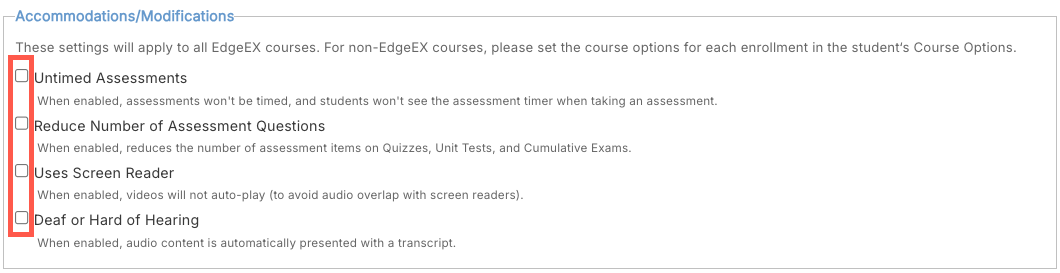
Educators can now create custom course splits. They can organize a course into trimesters, quarters, or modules to align with their grading/marking periods. 

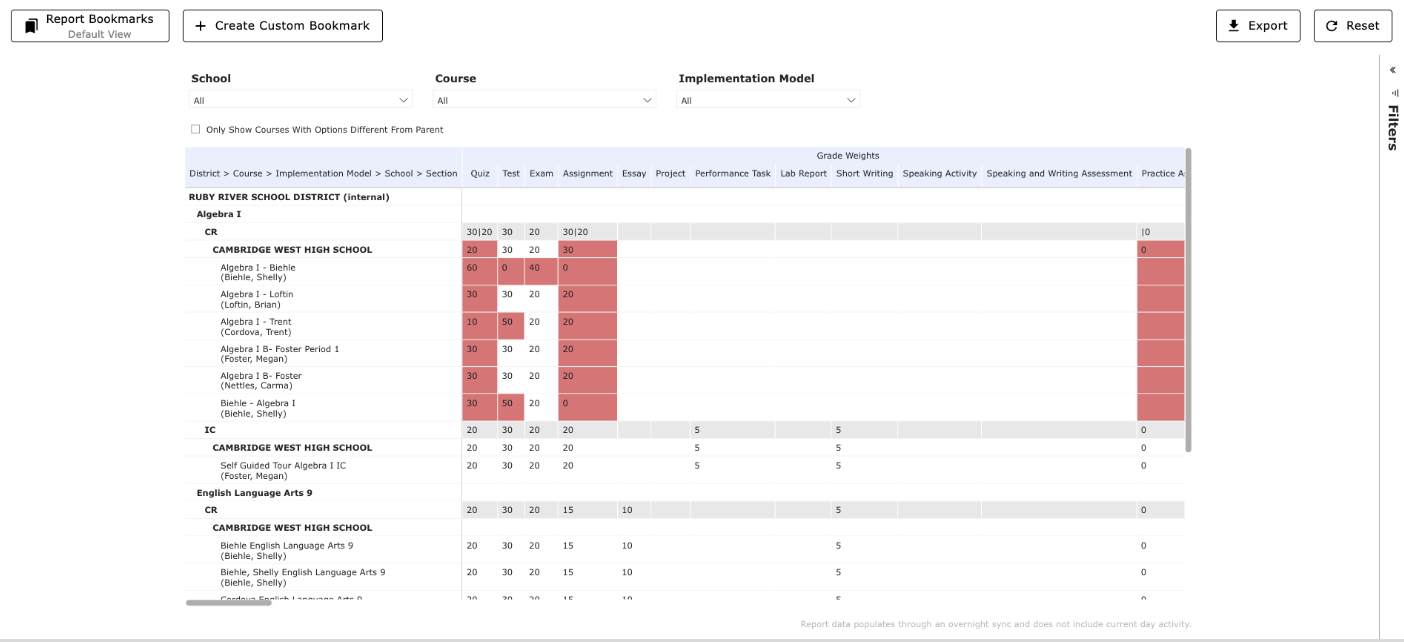
Course customization in Imagine EdgeEX

New Views Available in Imagine MyPath Cumulative Standards Proficiency Report  

Imagine EdgeEX

Now Available: District-and School-Level Views 

Have you had a chance to use the new Cumulative Standards Proficiency Report yet? Using student performance data from lesson mastery checks, this report provides a comprehensive view of students’ mastery of grade-level state standards to help you to easily identify skill gaps, tailor instruction, and support student learning.  

The report is available at the student-, class-, and now school- and district-levels. Read more about this helpful report and how to use it. 

school vs district views

New Rostering Experience Across Supplemental Suite

Imagine Learning Supplemental Suite

Easily print scannable student login cards 

Additional functionality has been added to the new rostering experience for Imagine Language & Literacy, Imagine Español, Imagine Galileo K–12, Imagine MyPath, Imagine Science Corner, and Imagine Purpose. Educators can now print student login cards for classes or individual students.  

These cards also contain a QR code that can be scanned with the device’s camera to log in without a username and password. We recommend sending family letters home with login cards so parents and caregivers understand how to help students use these programs outside of school. Learn more. 

ID card example

Twig Science Elementary Accessibility Enhancements  

Imagine EdgeEX

Captions now available in English and Spanish 

The closed and media captions for elementary digital interactives are now available in both English and Spanish. This includes all speech and sound effects (e.g., “Happy Music Plays” or “A lion roars! Rawwwr!”). This update allows us to further inclusivity and accessibility for all science learners. 

Coming to Imagine IM for Back to School 2025: IM v.360 High School Courses 

Imagine EdgeEX

In development: more innovative problem-based math courses 

As the first and longest-standing premium IM-certified partner, Imagine Learning is thrilled to share that the new IM v.360 high school courses for Imagine IM are currently in development and will be available for back to school 2025. These courses — Algebra 1, Geometry, Algebra 2, and Integrated 1, 2, and 3 — will bring the power of problem-based learning to your classrooms, fostering critical thinking and deep mathematical understanding. With this innovative approach, your high school students will engage with real-world problems and collaborative learning experiences that help them develop essential math skills for the future.

As a premier partner of Illustrative Mathematics, we’re excited to offer the full K-12 suite of IM v.360 content, providing comprehensive, high-quality math instruction to meet your students’ needs across all grade levels. 

Stay tuned for more updates as we get closer to launching these exciting new offerings and click here to explore samples of the Imagine IM high school courses. 

IL Core student samples

November 18, 2024 7:00 am

How Educators Can Tackle Academic Integrity in Online Learning 

Academic integrity is one of the biggest challenges educators face in today’s digital classrooms. Imagine Learning’s recent webinar explored how widespread cheating has become, why students resort to it, and the cutting-edge strategies available to address it.

Maintaining academic honesty is essential to fostering a productive learning environment, but as more learning takes place online, the avenues for academic dishonesty have increased. Imagine Learning’s recent webinar, “Navigating Academic Integrity in Online Learning,” featured insights from Deborah Rayow, VP of Product Management, and Cindy Rojas, Product Management Director. Together, they addressed the current scope of academic dishonesty, how digital tools have complicated the landscape, and what educators and districts can do to create an environment of integrity. 

Understanding the Scope of Academic Dishonesty 

“Cheating has certainly been an issue in education for as long as there’s been secondary school and colleges,” shared Deborah Rayow, reflecting on the persistence of this challenge. Cheating rates have grown alarmingly over the decades. In the 1940s, only 20% of college students admitted to cheating. Today, that number has surged, with studies showing that anywhere from 75% to 98% of college students admit to some form of dishonesty. Even at the high school level, around 95% of students admit to cheating. 

Why the sharp rise? Rayow suggested it may come down to perception: “The vast majority of students who cheat report believing they won’t be caught.” When students feel disconnected from the learning process or doubt they’ll be held accountable, they may be more inclined to engage in dishonest behavior. 

Actionable Advice: 

Districts should consider adopting clear policies on academic integrity, making expectations and consequences known. By providing training and resources that align with these policies, districts can support teachers and create a consistent approach across schools. 

Modern Cheating Techniques and Digital Challenges

In today’s digital classrooms, students have access to a variety of tools that make cheating easier and more sophisticated. From scripts and bots that can automate tasks to answer-sharing platforms, students can leverage technology to bypass traditional learning efforts. “Our data tells us that students feel empowered by these tools because they feel the risk of being caught is low,” explained Rayow. 

Actionable Advice: 

Educators can reduce opportunities for dishonesty by diversifying their assessment strategies. Consider options such as: 

  • Randomized Question Pools: By presenting unique questions for each student, it becomes harder for students to share answers. 
  • Timed Assessments: Limiting the time allowed for each assessment reduces the likelihood of students using outside resources. 
  • Project-Based Learning: Moving away from traditional exams and using project-based assessments gives students a chance to showcase their learning authentically. 

These methods do more than deter cheating — they allow students to demonstrate their understanding in meaningful ways. 

What Educators and Districts Can Do to Uphold Integrity 

Upholding academic integrity is not solely the teacher’s responsibility; it requires support at all levels, especially from district administrators. By establishing district-wide guidelines on integrity, school systems can empower teachers to maintain these standards in their classrooms. 

The webinar highlighted how teachers can set clear expectations, provide consistent reinforcement, and design assessments that discourage dishonesty. While teachers play a frontline role in fostering honesty, districts can support this mission with broader policies and resources. 

Actionable Advice: 

Districts should consider adopting clear policies on academic integrity, making expectations and consequences known. By providing training and resources that align with these policies, districts can support teachers and create a consistent approach across schools. 

Tools that Simplify Academic Integrity in Online Assessments 

One of the exciting highlights from the webinar was Imagine Learning’s upcoming Lockdown Browser, a tool designed to create a secure and fair testing environment by limiting access to other tabs, applications, or resources during online assessments. “Our goal is to support teachers with tools that create fair testing environments,” said Cindy Rojas. The Lockdown Browser, as well as other easy-to-use academic integrity tools, not only makes it more challenging for students to cheat, but also helps teachers focus on what truly matters — their students’ learning.  

When reliable tools are in place, teachers can concentrate on student progress without the constant need to double-check for signs of dishonesty. By reducing the temptation to cheat, tools like the Lockdown Browser support a more straightforward assessment process, where teachers can confidently assess students’ work and provide constructive feedback. This shift allows educators to prioritize meaningful interactions and focus on advancing each student’s understanding, rather than second-guessing the authenticity of their responses. 

Actionable Advice: 

Stay informed on user-friendly technologies that reinforce academic integrity. Implementing secure, accessible assessment tools helps create a culture of honesty, giving students the structure to approach their studies authentically and allowing teachers to devote their energy to supporting each learner’s academic journey. 

Academic integrity is a complex issue in online learning, but educators have powerful tools and strategies at their disposal. By fostering a classroom culture that values honesty, utilizing varied assessment types, and embracing new tools, educators and districts can build an online environment where integrity thrives. 

Watch the webinar recording here

November 17, 2024 8:04 am

Teachers’ Perceptions of AI in the Classroom

Discover how AI is reshaping education through personalized learning, improved efficiency, and increased teacher engagement. Explore the latest insights from educators on AI adoption, professional development needs, and the importance of ethical use and data privacy.

Imagine stepping into a classroom where every student’s unique needs are met, where teachers have more time to engage with their students, and where the latest technology supports every aspect of learning. This isn’t a distant dream — it’s happening now, thanks to the power of artificial intelligence (AI). The 2024 Educator AI Report, conducted by Michael Hallowell, Market Research Manager at Imagine Learning, gives us a glimpse into how educators see this exciting transformation.  

total participants in the 2024 Educator AI Survey

pie chart of AI survey participant roles

Responses from educators highlighted five areas of interest around AI in education: 

1. Enhancing Personalization and Student Engagement 

One of the most significant advantages of AI in the classroom is its ability to support personalized learning and enhance student engagement. AI-driven tools can analyze student performance data in real-time, providing insights that help teachers tailor their instruction to meet each student’s needs. This level of personalization ensures that students receive the appropriate support and challenges, promoting a more effective and engaging learning experience. AI-powered educational games and simulations bring abstract concepts to life, making learning more interactive and enjoyable. These tools not only capture students’ interest but also motivate them to actively participate in their learning journey. 

55%

of participants see generative AI as having the potential for a positive impact in the classroom.

88%

believe generative AI will make education more accessible for students with special needs.

2. Improving Efficiency and Time Management 

Educators are expressing increased optimism regarding AI’s positive impact. Teachers are beginning to see AI not as a replacement for their roles but as a powerful tool that can enhance their teaching. AI can take over routine tasks, such as grading and attendance, allowing teachers to focus more on personalized instruction and student engagement. This shift enables educators to spend more time on what truly matters — fostering a deeper connection with their students and addressing individual learning needs. By automating administrative tasks, AI helps teachers manage their time more effectively and dedicate more attention to high-impact teaching activities.

50%

of participants who use generative AI in the classroom find it makes their job easier.

3. Need for Professional Development and Support  

Despite the many benefits, the integration of AI in education highlights the need for professional development and support. Teachers express the necessity for ongoing training to effectively utilize AI tools and integrate them into their teaching practices. Schools and districts must invest in professional development programs that equip educators with the knowledge and skills needed to leverage AI technology. Providing access to resources, workshops, and continuous support can help teachers feel more confident and competent in using AI, ensuring its successful implementation in the classroom. 

38%

of participants report satisfaction with AI implementation. A major source of dissatisfaction is insufficient training.

84%

of participants view training sessions as most valuable in supporting generative AI implementation.

4. Questions Around Ethical Use and Data Privacy 

As AI becomes more prevalent in education, questions around ethical use and data privacy emerge. Teachers and administrators are concerned about the ethical implications of AI, data security, and the potential for misuse of student information. It is essential to address these concerns through clear guidelines, robust data protection policies, and ensuring equitable access to AI tools for all students. By establishing transparent practices and involving educators in the decision-making process, schools can foster trust and create a safe environment for AI integration. 

Participant concerns about generative AI

#1

plagiarism and cheating

#2

impact on students’ developing skills 

5. Increase in Adoption and Acceptance  

Teachers’ familiarity with AI in the classroom is on the rise, and so is their adoption and acceptance of it. From the 2023 to the 2024 report, there has been a noticeable increase in the number of educators who are not only aware of AI tools but are also actively integrating them into their teaching practices. This growing familiarity is accompanied by a shift in perception — from skepticism to optimism about the potential benefits of AI. As more teachers explore AI’s capabilities, they discover new ways to enhance their teaching methods and improve student outcomes. The increasing adoption and acceptance of AI reflect its potential to transform education and support teachers in their mission to help every student reach their full potential. 

86%

of participants are familiar with AI in education, a significant increase from 75% in Fall 2023.

50%

report increased AI usage among teachers and students since Fall 2023.

Read the Report