Teacher Presentation Mode, New Class Timer in Imagine Learning Classroom

Imagine Language & Literacy
Imagine Español

Maximize classroom flexibility with teacher presentation mode

Teachers can now manage and present lessons from a second device, offering greater flexibility in the classroom.

Optimize lesson pacing with the new class timer

The new timer feature in Live Learn helps manage lesson pacing and facilitates student break-out groups, ensuring smooth transitions and keeping lessons on track.

Imagine Learning EL Education Class Timer

Dashboard UI Updates in Imagine Learning Classroom

Imagine Language & Literacy
Imagine Español

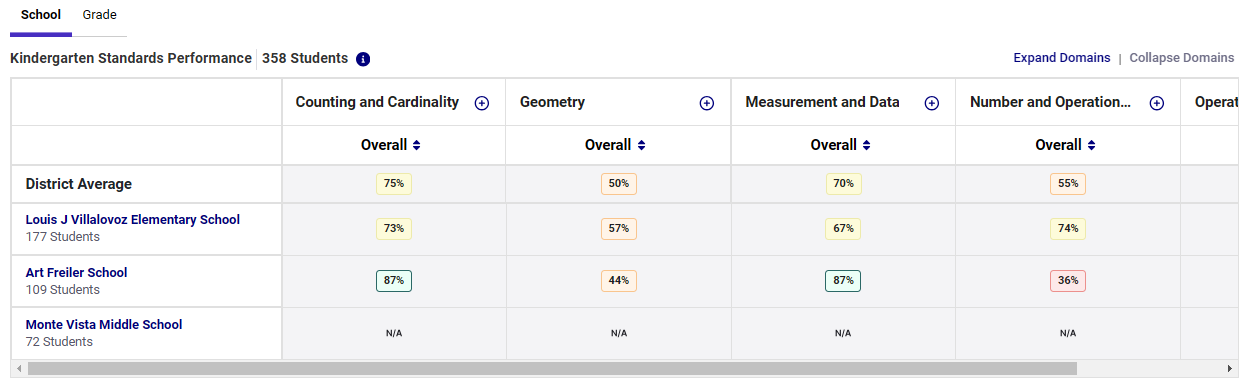
We’re enhancing the IL Classroom Dashboard for a more user-friendly and consistent experience across all reports in Imagine IM, Imagine Learning Illustrative Mathematics, and Imagine Learning EL Education.

Here’s what’s new:

  • Improved Layout: “Bottom standards” now appear before “Top standards” to match the scoring order used elsewhere
  • Unified Color Scheme: Color ranges in charts are now consistent across all reports
  • Enhanced Overview: Donut chart, bottom standards, and top standards sections are grouped together with a unified background for a clearer overview
  • Better Responsiveness: The dashboard now adapts better to smaller devices for a smoother user experience
Imagine Learning Classroom Dashboard

New Language Translations for Families & Caregivers in Imagine Learning EL Education

Imagine Language & Literacy

Create more connection between school and home with 10 new language translations for Family & Caregiver Letters and Module Overview videos.

  • Housed within each Imagine Learning EL Education Module, and in the Family & Caregiver Access Hub, families and caregivers can now access Family & Caregiver Letters in 10 additional languages further enhancing the school to home connection.
  • Module Overview videos set the stage for what’s to come in each module, and with closed captioning in 10 languages, families can engage more deeply with what’s happening at school at home.

New Warm-Up and Cool-Down Activities in Imagine Sonday System

Imagine EdgeEX

Curated activities for daily practice

Imagine Sonday System uses methods supported by the science of reading in every lesson, building phonics, phonological awareness, and fluency skills. Now, curated warm-up and cool-down activities also provide daily opportunities to incorporate vocabulary, comprehension, grammar, pragmatics, and more into your reading block using decodable words, sentences, and connected text aligned with each Imagine Sonday System level.

Imagine Sonday System Updated Branding

Imagine Sonday System’s Updated Branding

Imagine EdgeEX

New look, same commitment to quality and innovation

Winsor Learning has joined the Imagine Learning family, which is reflected in our new branding and name: Imagine Sonday System. While our branding has changed, one thing remains the same: the commitment to quality, innovation, and empowering educators and students alike.

Imagine Sonday System Updated Branding

Streamlined Mastery Check Data in Imagine Sonday System

Imagine EdgeEX

Save time and stay organized with a streamlined data process

We have streamlined the process of getting diagnostic data through mastery checks. This improved functionality allows teachers to save time and stay organized when making instructional decisions. It is also available at the administrator level.

Imagine Sonday System Updated Branding
Traverse Explorer

Equality in Voting Rights

Engage

Examine this flipbook to learn about the women’s suffrage movement’s leaders. 

Analyze

GERTRUDE SIMMONS BONNIN (ZITKALA-ŠA): ADVOCATE FOR THE “INDIAN VOTE” 

Genre: Article | Creator: Cathleen Cahill | Date: 2020 

Background 

Gertrude Simmons Bonnin (1876–1938), also known by her Lakota name, Zitkala-Ša, was an Indigenous suffragist and civil rights activist. She advocated for voting rights for Indigenous people and for the right to be acknowledged and respected as both a Yankton Sioux and an American. This article explores Zitkala-Ša’s life and activism. 

Learn about Zitkala-Ša’s contributions to voting rights for Indigenous people.

In 1924, advocacy by Native people like Zitkala-Ša and members of the Society of American Indians, along with complex political currents such as gratitude for Native veterans and increasing nativism, convinced Congress to pass the Snyder Act or the Indian Citizenship Act that endowed full US citizenship rights on all Native people born in the country. However, the law upheld US government oversight of Native lands. 

Zitkala-Ša was thrilled by the possibility of the vote. For many years she had been developing her ideas of capacious citizenship for Native people that could encompass membership in a Native nation as well as US citizenship. She also believed that by voting together, Native people could form a powerful bloc in certain states, especially those with large Native populations, that could help change federal policies. She urged Native people to take advantage of their new citizenship status to vote. In 1926, she and her husband formed the National Council of American Indians to coordinate the political actions of Native people across the nation. For three summers they traveled to Native communities learning of their concerns, discussing recent legislation, and registering voters. Initially, this seemed like a promising strategy. Many Native people began to vote and some Native men ran for and were elected to office, including Senator Charles Curtis a citizen of the Kaw Nation who served as Herbert Hoover’s vice president (1928–1932). 

However, many non-Natives, especially in states that had significant populations of Indigenous people like Arizona, Montana, and New Mexico, used a variety of strategies to disenfranchise Native people. Some of those strategies mirrored Southern Jim Crow laws, such as literacy tests, at-large elections, or poll taxes. Arizona and New Mexico argued that despite the Citizenship Act, anyone living on land that remained under government trust oversight in a wardship status could not vote. In this way, states used the relationship between Native people and the federal government to suppress voting. Zitkala-Ša was outraged. She continued her advocacy for Native rights and especially for self-governance of her nation, the Yankton Sioux, until her death in 1938. 

Excerpted from“Gertrude Simmons Bonnin (Zitkala-Ša): Advocate for the ‘Indian Vote.’” 

Collaborate

Give One, Get One

Pose the following question to students. 

What are additional benefits that come with the right to vote? 

  • Have students write several answers to the question. 
  • Have students move around the room and talk with other students to give and get ideas in response to the question. Students should try to get at least one new idea from each peer conversation. 
  • Call on several students to share an idea they got that shaped their thinking. 

Teacher Resources

Think Like a Historian

Use this additional sourcing information to further contextualize the source in order to deepen students’ analysis and evaluation. 

Summary

This article describes the activist work of Gertrude Simmons Bonnin, or Zitkala-Ša. Zitkala-Ša urged women to use their new political power to advocate for Indigenous people’s rights and U.S. citizenship, which is something Zitkala-Ša did her entire life. 

Purpose

The purpose of this source was to describe the life and advocacy work of Zitkala-Ša. 

Intended Audience

This article was intended for a general contemporary audience. 

Source Considerations

This source shows that Indigenous American women were not granted the right to vote with passage of the 19th Amendment. Instead, they were still unable to vote until 1924 and, along with Indigenous American men, had to fight to exercise their rights because of discriminatory laws. 

Scaffolding and Differentiation

Use the following information to provide reading comprehension support. 

Genre 

Explain that this article was originally published on July 30, 2020, on the Women’s Suffrage Centennial Commission’s blog. The digital version has images and hyperlinks that are not replicated in this excerpt. 

Style 

Cahill uses long, complex sentences that students may find challenging. Encourage them to summarize Cahill’s main points.

Analyze and Discuss

To extend discussions, consider asking the following questions.

  • What is the author’s central claim? 
    • (Cahill’s central claim is that Zitkala-Ša advocated for voting rights for Indigenous citizens and for other Indigenous rights.)
  • Identify a piece of evidence Cahill uses that supports this claim.
    • (Answers will vary but may include “She urged Native people to take advantage of their new citizenship status to vote.”)

July 30, 2024 6:15 am

Imagine Learning Launches Enhanced Sonday System With Science of Reading Support 

Empowering Educators with Effective Tools for Every Student’s Success

Tempe, Arizona, July 30, 2024 – Imagine Learning, a leader in digital-first educational solutions, proudly announces the enhancements to the market-leading Imagine Sonday System. This powerful, multisensory reading program, based on the Orton-Gillingham approach, is designed to meet the diverse needs of students in special education, struggling readers, and students learning to read, ensuring every learner receives the support they need to succeed.

Innovative Enhancements to Support More Learners

The enhanced Imagine Sonday System builds on the structured, systematic, and multisensory teaching methods already proven effective and augments them with explicit instructional support grounded in the science of reading. Educators can implement comprehensive lesson plans with minimal preparation, now pairing them with science of reading-aligned warm-ups and cool-downs. This ensures the most effective, research-based reading instruction. The program offers vital tools to immediately identify and support struggling readers as early as PreK.

“The Imagine Sonday System has already empowered countless educators to tackle reading challenges effectively, ensuring student success,” said Eric Smith, General Manager of Imagine Learning Sonday System. “By integrating the latest science of reading research, our updated system provides a robust and effective solution for educators, from kindergarten through advanced levels.” 

Addressing Students with Special Needs

The number of students in special education programs has significantly increased over the past decades, highlighting the urgent need for effective interventions aligned with the latest science of reading research. The Imagine Sonday System offers a comprehensive solution of Tier 1 support and Tier 2 and Tier 3 interventions, which improve reading skills and help students transition out of special education when appropriate. Additionally, robust data collection and progress monitoring help meet stringent oversight and compliance requirements. 

Tackling Teacher Shortages

Imagine Sonday System addresses the pressing issue of teacher shortages, particularly in special education. The straightforward implementation process allows both veteran educators and those with little to no experience teaching reading to deliver high-quality instruction, alleviating some of the staffing pressures faced by schools. Paraprofessionals can also effectively implement the system, broadening the range of educators who can support students. Imagine Learning offers additional teaching support with Small Group Targeted Instruction, ensuring effective delivery of interventions and comprehensive support for both educators and students. 

Key Benefits of the Enhanced Imagine Sonday System

  • Ease of Use: Streamlined, six-step lesson plans ensure that educators can quickly implement the program with minimal training. 
  • Efficiency: Designed for rapid deployment; teachers are prepared to deliver high-quality lessons after just one training day. The intervention-focused lesson plans are pre-written, include all materials for delivery, and are designed to be only 35 minutes in length. 
  • Accessibility: Available in both digital and print formats, this inclusive solution ensures that a wide range of educators, from seasoned professionals to volunteers, can access and utilize the resources effectively. 
  • Support: Continuous access to expert advice and support ensures sustained success and effective implementation. 

To learn more about how Imagine Learning is driving equitable success for students with disabilities, visit Imagine Sonday System.

About Imagine Learning

Every classroom, every student is bursting with potential. That’s why we pursue relentless innovation at the intersection of technology, people, and curricula. Imagine Learning creates K–12 digital-first solutions, working alongside teachers to support 15 million students in over half of the districts nationwide. Our core portfolio includes Imagine IM, Imagine Learning EL Education, Twig® Science, and Traverse®. Our robust supplemental and intervention suite equips learners with personalized instruction for English and Spanish literacy, math, coding, and more. Imagine Edgenuity® and Imagine EdgeEX offer innovative courseware solutions, complemented by Imagine School Services’ Certified Teachers. Imagine Learning. Empower potential. Learn more: imaginelearning.com.

July 18, 2024 2:32 am

Is Professional Learning the Antidote to Teacher Burnout?

Discover the hidden power of professional learning in addressing teacher burnout. This blog post explores how shifting from traditional professional development to a more collaborative, teacher-driven approach can rekindle educators’ passion and resilience, ultimately benefiting both teachers and students.

Before we dive into what makes professional learning effective, we need to address the elephant in the room: the difference between professional development and professional learning. Bradley et al describe them as two mindsets, with the professional learning mindset being one “in which professional learning and growth are centered around accelerating personal and collective learning.”  

The shift from a PD to PL mindset means “moving from delivering information to intentionally co-designing, with educators, learning and growth opportunities that are grounded in the evidence about what is most needed and most effective.” 

So, while at first it seems like a small difference in semantics, it’s really the key to this whole conversation — especially during a time when teacher burnout is high. 

Addressing teacher burnout… with professional learning?

At this point, we know many of the causes of teacher burnout: heavy workloads, lack of funding, and classroom behavior issues, to name a few. But if these stressors don’t have an immediate fix, how do we help address the problem? 

You might roll your eyes when I say professional learning. But keeping in mind the shift in mindset, more one-off PD days are not what we’re talking about — not even if the focus is on teacher wellness. We’ve looked before at how administrators can care for teachers, including offering mental health and wellness support. But frankly, teachers are tired of being told to prioritize self-care when they don’t have the time or bandwidth.  

Educators go above and beyond for their students, ignoring their own well-being (inspiring the well-intentioned push to promote self-care) because teaching is a mission-driven craft. And because of that, we are seeing teachers burn out at rates that align with other service- and mission-oriented roles (e.g. nursing, social work, etc.).  

At the beginning of their careers, teachers feel deeply rooted in their “why,” but as the daily stresses of the profession take over, they can start to feel distanced from that purpose. This is what psychologists call misalignment burnout, when “we constantly engage with environments and in activities that go against our innermost values and beliefs, leading to a disconnect between our true selves and professional identity.”  

So how can we help teachers with this misalignment? That’s where professional learning comes in. 

The key to effective PL: reconnecting teachers with their “why”

A critical aspect of effective professional learning is that it helps educators to reconnect with their “why” and refills the proverbial tank needed to keep giving and giving and giving in an increasingly skilled way.  It also helps teachers to build a toolkit for how to respect their own barriers, keep their own well-being in check, and systematize the individualized support that they want to offer each student.   

Effective professional learning is teacher-driven, and therefore tailored by grade level, content area, career stage, and specific interests or passions. Teachers are professionals and should be treated as such, with autonomy and choice over how they hone their skills and stay informed about current research.  

We know that professional learning should be enduring, ongoing, job-embedded, and relevant, but if the main goal isn’t to get teachers back to that “why,” it’s missing a critical element. The goal is of course to build and strengthen skills, but the other, equally important outcome is to help teachers rekindle motivation and strengthen resilience.  

PL ideas that bring focus back to the “why”: 

New challenges arise and best practices evolve, “but one thing that has never altered is educators’ desire to affect positive change in the classroom.” So, if professional learning can tap into that in a meaningful way, it can make huge strides toward reinvigorating teachers. 

About the Author — Krysia Lazarewicz

Krysia Lazarewicz is Vice President of Professional Learning and Development at Imagine Learning, where she leads the vision, strategy, and execution of our professional learning. Before joining the Imagine Learning team, Krysia was Vice President of Business Development at Wiley University Services, where she partnered with over 100 institutions to develop and launch new online programs, focusing on helping educators and learners achieve their goals. Krysia’s background includes teaching middle school math and science and working in content development for Pearson. She has a strong passion for improving lives through education. 

July 16, 2024 6:30 am

Imagine Learning Introduces AI Grading Assistant for Writing in Imagine EdgeEX

Leading K–12 Curriculum Solutions Provider Uses AI to Empower Teachers and Enhance Education

Tempe, Arizona, July 16, 2024 – Imagine Learning, the largest provider of digital curriculum solutions in the U.S., serving 15 million students in more than half the school districts nationwide, today announced a newly developed AI tool within the Imagine EdgeEX curriculum offering, available in beta to all current customers. Imagine EdgeEX is the next generation of Imagine Edgenuity, designed to engage students and to help teachers streamline their work with actionable data and easy-to-use, customizable tools, an easy-to-navigate dashboard, and accessible features.

Imagine EdgeEX’s new AI Grading Assistant for writing provides teachers with actionable, context-specific feedback on submitted writing activities. The feature evaluates student writing, providing suggestions on clarity of thought, alignment to the learning objective, quality of writing, and more. This innovation saves educators time and significantly scales their impact, allowing them to devote more time to meaningful interactions with students. This tool will soon be complemented by additional AI-powered tools to help learners and teachers work more effectively and efficiently. Amid the shifts in education with the advent of generative AI, ongoing teacher shortages, and hurdles those in the profession face daily, there is a critical need to make teachers’ lives easier.

“At Imagine Learning, our priority has always been to create innovative, digital-first solutions that enhance the classroom experience for teachers and learners,” said Kinsey Rawe, Senior Vice President and General Manager at Imagine Learning. “Teachers are under so much pressure in today’s educational landscape. In a time where turnover and shortages continue to plague districts across the nation, we’re proud to launch Imagine EdgeEX’s first AI tool to not only lighten their workloads but also provide them with the support and empowerment they need.”

“When we set out to bring the power of generative AI to Imagine EdgeEX, protecting our customers’ data and privacy had to be our top priority. That’s why we intentionally designed our short-writing feedback with a privacy-first architecture, minimizing the data collected and shared, ensuring that our AI partners cannot use students’ submissions to train their models. Our customers can enjoy the personalized, intelligent experiences enabled by AI while having peace of mind that their data is fully protected and used only in accordance with our strict privacy policies,” said Jason Fournier, Vice President of AI Initiatives at Imagine Learning.

The new AI tool keeps the teacher in control while keeping security and privacy at its core. Teachers have the freedom to use, modify, or ignore the AI-suggested comments at their discretion. Another important goal was to make it convenient, so the tool is integrated into teachers’ feedback workflow within Imagine EdgeEX. Teachers can quickly choose, edit, or discard feedback without copying and pasting or moving between systems.

Along with Imagine Learning’s previously announced AI enhancements like the AI-tutoring assistant within Imagine Learning Sessions and the acquisition of Cue Think, this latest development reflects the company’s ongoing commitment to integrating AI into the education experience to enhance personalized learning and educator support.

To learn more about Imagine EdgeEX’s new AI feature and offerings for teachers, visit imaginelearning.com/edgeEX-ai.

About Imagine Learning

Every classroom, every student is bursting with potential. That’s why we pursue relentless innovation at the intersection of technology, people, and curricula. Imagine Learning creates K–12 digital-first solutions, working alongside teachers to support 15 million students in over half of the districts nationwide. Our core portfolio includes Imagine IM, Imagine Learning EL Education, Twig® Science, and Traverse®. Our robust supplemental and intervention suite equips learners with personalized instruction for English and Spanish literacy, math, coding, and more. Imagine Edgenuity® and Imagine EdgeEX offer innovative courseware solutions, complemented by Imagine School Services’ Certified Teachers. Imagine Learning. Empower potential. Learn more: imaginelearning.com.