Imagine Learning
Join us In Session and discover what's new for back to school 2026 Take Me There

May 27, 2026 5:21 pm

Rethinking Screen Time in the Classroom 

How districts are refining the role of technology in instruction 

As conversations around screen time grow louder, educators are being asked to reduce device use while still delivering meaningful, effective instruction. This post explores what actually helps in the classroom and how schools can support teachers with the right mix of tools, curriculum, and flexibility.

If you’ve been in a staff meeting recently, screen time has probably come up.  

Teachers and administrators are grappling with whether classroom devices are helping students focus or pulling them away. In one lesson, technology might support a quick check for understanding before a discussion. In another, it’s a room full of open tabs and drifting attention.

Not all screen time looks the same. There’s a difference between social media outside of school, passive consumption during class, tools designed around engagement alone, and tools that actually support learning. These gaps often get overlooked.

The focus is primarily on what happens during the school day, even though students are spending far more time on screens outside the classroom, usually in ways that have little to do with learning.
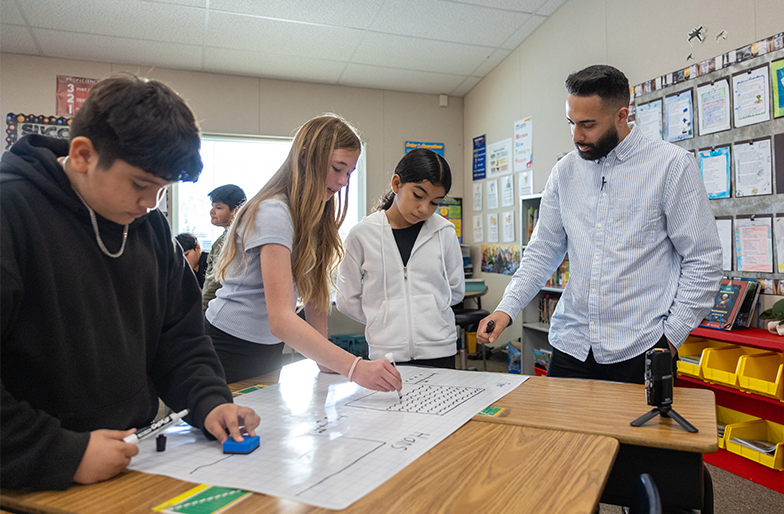
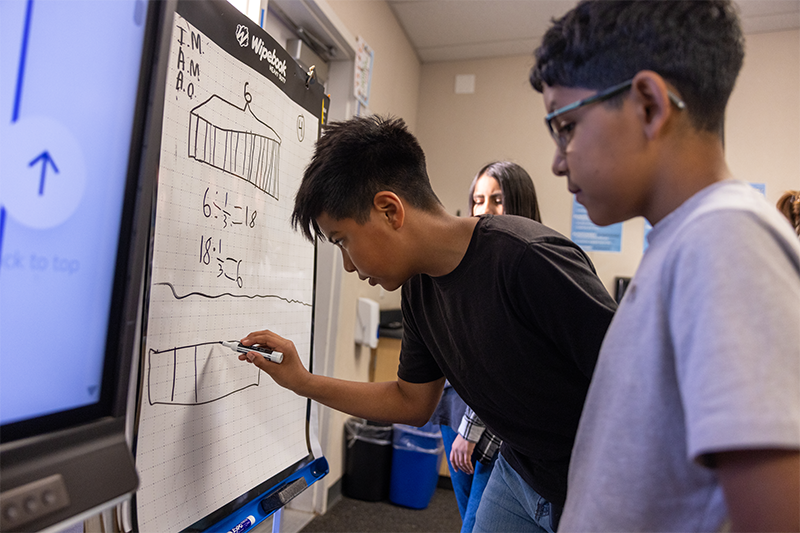
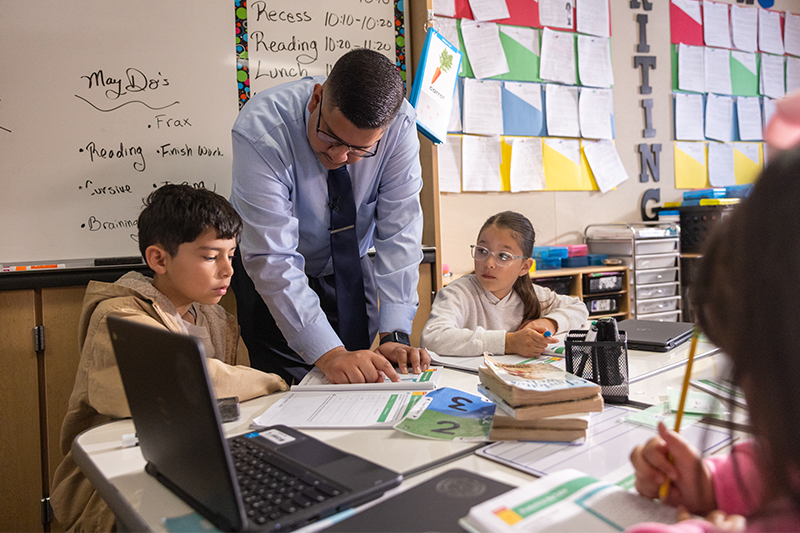
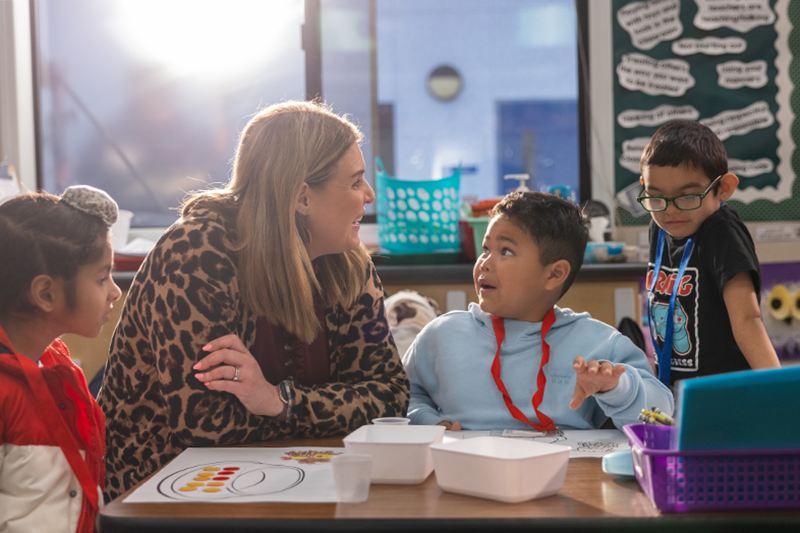
All photos are from real Imagine IM® classrooms

That broader context is part of why the conversation keeps coming up in different ways, but it usually lands in the same place: teachers want tech that actually helps, even as they’re being asked to reduce screen time. 

When large districts like Los Angeles Unified start changing policies, it tends to bring those same questions into staff rooms everywhere. But rather than moving away from technology entirely, schools are being more selective about what stays in the lesson. Time is tight, and if something is on a screen, it needs to earn its place. 

What’s actually being asked

At a high level, the debate can sound familiar: not all screen time is the same, and not all tech tools are created equal. But in practice, those differences are often blurred.

In classrooms, though, the distinction is more immediate. Some tools help a teacher reach a student who’s stuck or falling behind. Others keep students occupied but don’t move learning forward, even if they look engaging on the surface. You can see the difference in how students respond: whether they’re thinking, trying again, asking better questions, or simply clicking through.

That’s why the conversation is shifting. Schools are being asked to reduce ineffective screen time while still making room for tools that support instruction in meaningful ways. Part of the challenge is that not all technology brought into classrooms was designed with instruction at the center. In some cases, tools were adopted quickly, without a clear role in the day-to-day learning process.

What hasn’t changed is the importance of strong instruction, high-quality curriculum, and the role educators play in guiding learning every day. When technology works as intended, it fits into that system. When it doesn’t, it competes with it.

So the question isn’t “does technology have a place in the classroom?” It’s “what actually helps, and how does it support teachers in making crucial decisions in real time?”

For us, that comes down to a few things: technology should be purposeful, grounded in high-quality curriculum, and integrated into instruction in a way that supports what teachers are already doing.

What this looks like in practice

Most educators don’t need convincing because they’ve seen both sides of tech firsthand.

They’ve had lessons where a digital tool empowered a student, and others where it fell flat. They’ve seen moments when technology helped a student stay engaged and keep trying, and moments when it became a distraction that stalled the learning process.

That’s why this conversation is about being deliberate, rather than using more or less technology.

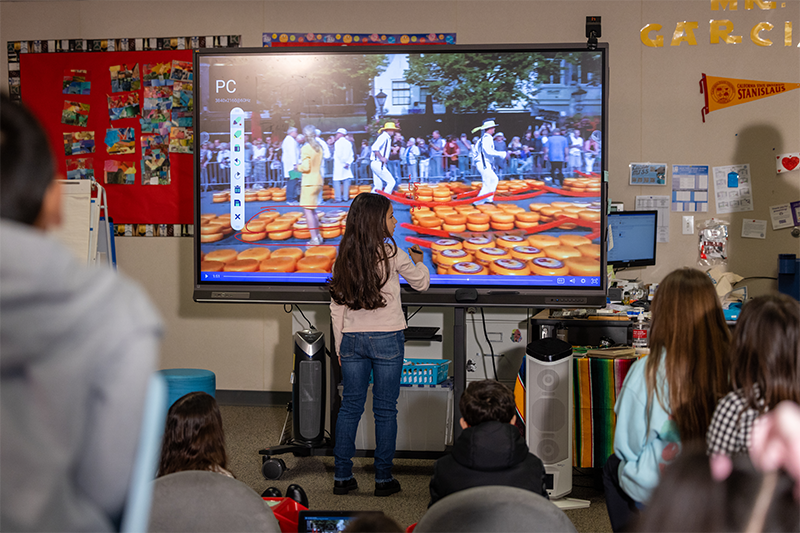
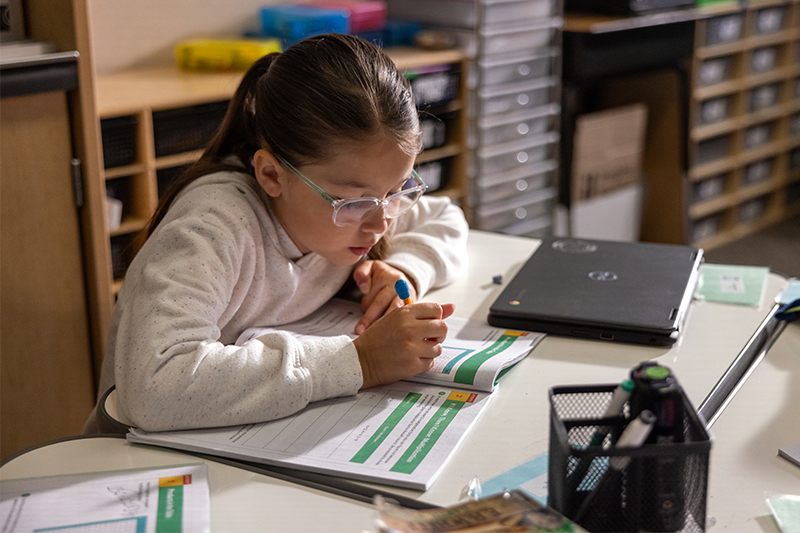
In practice, that often means moving between digital and offline work. A teacher might use a digital activity to check understanding, then move into discussion, written work, or small-group instruction. The learning doesn’t stay on the screen, and it isn’t meant to.

What matters is how the pieces work together to support the lesson.
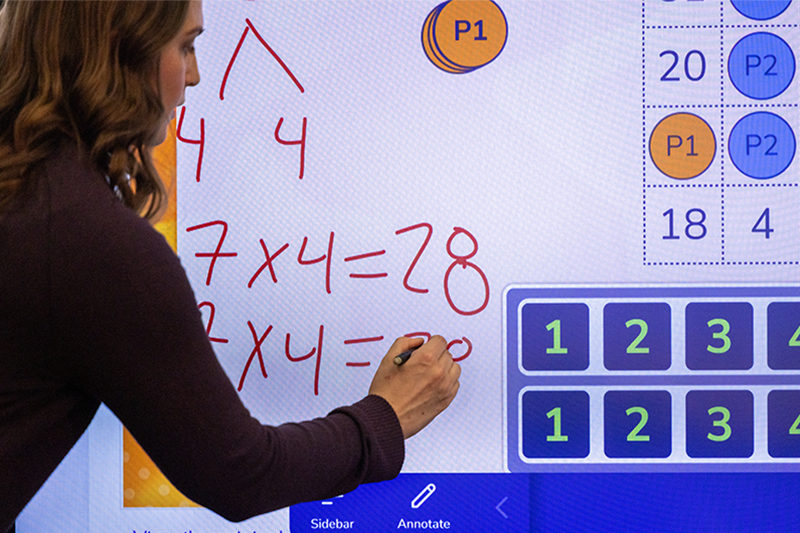
That can (and should) also look different depending on the grade level. In earlier grades, it makes sense to use technology sparingly, focused on building a foundation for durable skills. This will scale up throughout upper elementary and middle school to heavier use in high school, understanding that the closer students get to college or career, the more their command over intentional AI use, virtual collaboration, and analysis of digital sources becomes critical.
How we’re supporting educators at Imagine Learning

At Imagine Learning, our role is to help teachers navigate that reality, not to add to the noise. We start with a simple question: does this solution actually help teachers do their job? That means being intentional about when technology is used, and just as intentional about when it isn’t.

Designing for how classrooms actually function often means giving teachers flexibility to move between digital and offline instruction without losing momentum.

Across our programs, that flexibility is built in. Print and digital components are developed together, not as separate add-ons, so technology supports instruction instead of driving it. In the classroom, that might look like:

Using a digital activity to surface misconceptions in real time

Transitioning into a printed task or collaborative work to deepen understanding

Using insights from digital work to guide small-group instruction or reteaching

This ensures the tool doesn’t drive the lesson. The teacher does.

Grounded in high-quality curriculum

It also means focusing on the quality of what’s being used rather than just the format.

Across our portfolio — from core curriculum like Imagine IM® and StudySync® to courseware like Imagine Edgenuity® — instruction is grounded in research-based, standards-aligned content that stands up to passing fads. Lessons are designed to build understanding over time, whether they’re delivered through print, discussion, or digital interaction.

Technology plays a role in that process, but it isn’t the center of it. High-quality curriculum and proven pedagogy come first, and when those are missing, no amount of technology can compensate.

It’s also important to recognize that not all tech use serves the same purpose in education. In some cases, it’s supporting day-to-day instruction in the classroom, where questions about screen time and engagement tend to come up. In others, it’s making access possible in ways that wouldn’t otherwise exist.

Supporting the full instructional process

Supporting teachers also goes beyond the tool itself. That’s something the broader edtech space hasn’t always fully addressed.

Through Imagine School Services, districts can access certified educators, tutoring, and implementation support that help extend and reinforce instruction, whether learning is happening online, in person, or in a blended model. The same idea is true for courseware. For students who need access to courses their school can’t staff or flexibility to stay on track, digital delivery is the solution.

And through ongoing professional learning and implementation support, we work with educators to ensure digital tools are used in ways that make sense for their classrooms, not in isolation, but as part of a broader instructional approach.

Because even the best tools won’t make a difference if they don’t fit the realities teachers are working in every day.

Built for flexibility, not uniformity

No two classrooms look the same, and they shouldn’t have to.

What works in one setting, subject, or student group may not work in another. Our goal is to support that variability by giving educators options, not prescriptions. We equip them to make informed decisions about when to use digital tools, when to step away from them, and how to connect everything in between.

Where the work continues

The debate around screen time isn’t going away. But the work ahead is becoming clearer: supporting teachers with the tools, materials, and flexibility they need to make the right call in each moment. Because in the end, it’s not about more screen time or less. It’s about what actually helps students learn and making sure teachers have what they need to get them there.

If your team is working through these questions, it’s worth taking a closer look at what’s making a difference in classrooms and how your tools and materials are supporting that work.

Kinsey Rawe 

Executive Vice President & Chief Product Officer at Imagine Learning 

Kinsey leads product innovation at Imagine Learning, leading the development of digital tools that empower educators and students. His vision is shaped by a deep understanding of how technology and AI can enhance learning across diverse environments. Before joining Imagine Learning, Kinsey developed content management, learning management, and student information systems.