January 30, 2024 9:00 am

Imagine Learning Foundation Opens 2024 Funding Cycle for Signature Grant Program

Embarks on Year Three of $5 Million Campaign to Fund Nonprofits Dedicated to Supporting Student Well-Being Outside of the Classroom 2024 Emphasis on Chronic Absenteeism and Student Homelessness Crisis

Scottsdale, Arizona – January 30, 2024 – Imagine Learning Foundation (ILF), the philanthropic initiative created by Imagine Learning, the largest provider of digital curriculum solutions in the United States, announced today the opening of the 2024 funding cycle for its Imagine Signature Grant program. Founded in 2022, ILF is entering the third year of its $5 million grant campaign and will award $400,000 or more in Imagine Signature Grants in 2024 to organizations dedicated to ILF’s mission of supporting the well-being of learners outside of the classroom, either at home or in their communities.

This year, ILF will place a special emphasis on sponsoring initiatives aimed at addressing both chronic absenteeism and the student homelessness crisis that are affecting students nationwide. These pressing issues were highlighted earlier this month in a statement by the Biden-Harris Administration announcing that increasing attendance is a key focus of their Improving Student Achievement Agenda in 2024. Chronic absenteeism, particularly for children experiencing homelessness, has severe consequences for learning, emotional well-being, stability, and future outcomes through a student’s life. According to the National Center for Homeless Education’s December 2023 report, over 1.2 million students identified as experiencing homelessness and approximately 52% were chronically absent during school year 2021-2022.

While ILF will prioritize funding to organizations working to support the needs of homeless students, ILF will also consider projects from other eligible entities aligned with ILF’s mission for the Imagine Signature Grant program.

“We are excited to enter our third year of continued financial commitment to invest in this critically important work across the communities we serve,” said Jonathan Grayer, Chairman and Chief Executive Officer of Imagine Learning. “We have empirical evidence that students who receive devoted support, attention, and care outside of the classroom flourish academically and grow into vibrant members of society. However, none of that is possible without a safe and secure place to call home for each student. We are dedicated to combating the chronic student homelessness crisis and look forward to funding those programs that demonstrate an unwavering determination to transcend traditional learning environments with innovative solutions that improve students’ overall mental and physical well-being. We can’t wait to see the applicants for this grant cycle.”

The 2024 Imagine Signature Grant program will award grants to eligible applicants dedicated to any of these funding priorities:

  • 2024 Funding Priority: Supporting eligible organizations who are addressing vital issues concerning student housing insecurity and their basic needs along with the associated chronic absenteeism by students from their daily K-12 learning environments.
  • Other Mission-Aligned Programs: Supporting programs, activities or services fostering learning well-being of youth, families, and educators outside of the classroom and into their home and community environments.
  • Education and Community Research: Studying the current impact that social, physical, mental and emotional well-being has on accelerating student achievement across diverse communities, including students and youth experiencing homelessness and chronic absenteeism from their K-12 learning environments.

“The array of incredible organizations dedicated to learner well-being that we’ve encountered since forming the Imagine Learning Foundation has affirmed our belief that every student and those that support them can benefit from increased resources,” said Chris Graham, Chairman and President of the Imagine Learning Foundation. “We’re incredibly proud of all our previous grantees and their projects. Although, as we enter our third year, we know there has been a growing crisis for youth experiencing homelessness and chronic absenteeism from their learning environments. We are eager to partner with organizations tackling this issue.”

Previous Imagine Signature grant winners include Up2Us Sports, Erika’s Lighthouse, WPSU (Penn State University Philanthropic Fund), Our Minds Matter, Genesys Works, and Big Sky Youth Empowerment. Learn more about ILF’s grant recipients and programs here.

The 2024 Imagine Signature Grant program is now open for applications through March 29 and award winners will be announced in July 2024. The 2024 grant cycle is below:

  • Application Opens – January 30, 2024
  • Application Deadline – March 29, 2024 (11:59pm PST)
  • Award Notifications – June/July 2024
  • Grant Awards – July 2024

In addition to the Imagine Signature Grant Program, ILF also conducts its Grassroots Grant Program each year, which awards a series of smaller grants to organizations nominated by Imagine Learning employees that focus on out-of-classroom programs dedicated to learner well-being, such as student-driven kindness and anti-bullying messaging and after school programs shown to increase self-confidence, attendance rates, emotional well-being, and academic performance.

To learn more about the Imagine Learning Foundation 2024 Imagine Signature Grant Program guidelines, visit imaginelearningfoundation.org.

Access the online grant application portal

About Imagine Learning Foundation

Imagine Learning Foundation is a non-profit organization focused on fostering the well-being of learners and the people who support them at home and in their communities. Established in 2021, the Imagine Learning Foundation funds a variety of grants to mission-aligned national non-profit organizations that support initiatives to foster well-being of youth, families, and educators with an emphasis on accelerating student achievement. Imagine Learning Foundation is the philanthropic initiative of Imagine Learning, the largest provider of digital curriculum solutions in the U.S. Additional information is available at imaginelearningfoundation.org.

January 25, 2024 9:00 am

Districts Call for Guidance in Developing AI Policies for the Classroom, New Report Finds

Without federal regulation and few states guiding AI use, 47% of districts nationwide plan to develop their own AI policies

Scottsdale, Ariz., January 25, 2024 – Imagine Learning, the largest provider of digital curriculum solutions in the U.S., serving 15 million students in more than half the school districts nationwide, today released the findings from its new report, “The 2024 Administrator AI Report: Perceptions, Practices, and Potential in Education,” to identify administrators’ perceptions on the benefits and advantages of generative AI and benchmark its current rate of adoption.

To date, only two states have formulated a comprehensive AI policy absent federal guidance for districts to look to. Although several organizations such as the Consortium of School Networking, the International Society of Technology in Education, and the Council of the Great City Schools have released generative AI guidelines and best-use practices for K–12 educators and districts, according to the report, 47% of administrators are planning to implement comprehensive policies on their own and 54% have indicated they would also like help from education solutions providers to reduce risks and concerns associated with generative AI.

One-third of administrators also expressed a desire for education companies to publish and use a code of ethics when developing generative AI, while 36% plan to implement guiding frameworks for adoption and use within their schools.

These findings suggest the need for a strong call-to-action to increase technology use and services, as well as training and official guidance for safe AI implementation in schools, with education solution providers at the forefront of this push alongside schools.

Other notable findings from Imagine Learning’s report indicate the following sentiments and intentions from administrators:

  • AI’s Net Positive Outlook in Education: 64% of administrators believe generative AI will positively impact education, with only a minimal number (5%) planning to ban it.
  • Positive Student Engagement with Generative AI: The majority of students using generative AI use it ethically to improve knowledge, with research (70%), writing refinement (65%), and creating study aids (55%) as top uses.
  • Easing the Burden on Teachers with Personalized Learning and Efficiency: Over one-third of administrators recognize generative AI’s role in creating personalized learning materials and saving time, a significant priority in K–12 education.
  • Supporting Teachers and Curriculum Development: 50% see generative AI aiding in lesson planning, with notable contributions to idea generation and individualizing lesson materials that aid teachers in completing repetitive tasks, easing teacher burnout.

“Districts are willing to integrate AI into their classrooms, but currently lack the proper resources, governance, and training needed to do so successfully,” said Sari Factor, Chief Strategy Officer at Imagine Learning. “Our survey reveals a critical opportunity for shaping AI’s role in education. It’s a collective call to action, urging us to work alongside policymakers and education organizations to craft guidelines that ensure AI’s integration is as responsible as it is transformative.”

“This survey isn’t just about understanding AI’s role in education—it’s a roadmap for responsible implementation,” said Kinsey Rawe, Senior Vice President & General Manager, Courseware & Instructional Services. “By understanding firsthand how AI tools enhance teaching and learning, we’re poised to guide the development of policies that are both innovative and attuned to the real needs of educators and students in a digital-first learning environment.”

Consistent with recent findings from Imagine Learning’s 2023 Educator AI Report, both teachers and administrators recognize the potential for generative AI to alleviate much of the burden currently impacting teachers. To learn more about what administrators are saying about AI’s role in supporting teachers, please download the full report here.

Methodology

The survey consisted of responses from 163 K–12 education administrators who work in districts across the U.S. Imagine Learning conducted the survey from October 31–November 9, 2023, through an online, quantitative survey that was approximately 10 minutes in length. 71% of respondents were district administrators and 29% were school administrators.

About Imagine Learning

Every classroom, every student is bursting with potential. That’s why we pursue relentless innovation at the intersection of technology, people, and curricula. Imagine Learning creates K–12 digital-first solutions fueled by insights from educators, working alongside educators to support 15 million students in over half of the districts nationwide. Our core portfolio includes Imagine IM®, Imagine Learning EL Education®, Twig Science®, and Traverse®. Our robust supplemental and intervention suite equips learners with personalized instruction for English and Spanish literacy, math, coding, and more. Imagine Edgenuity is our flagship courseware solution, complemented by Imagine School Services’ Certified Teachers. Imagine Learning. Empower potential. Learn more: imaginelearning.com.

Spanish closed captions in Imagine Learning EL Education Module Overview videos

Imagine Learning | EL Education

Module overview videos now have Spanish closed captions

Spanish closed captions have been added to our Module Overview videos

With the addition of Spanish closed captioning, students and families who are Spanish speaking can fully engage with our module overview videos, strengthening the home-to-school connection.

Access by clicking on the closed caption icon at the bottom of the video and selecting Español.

Updated Features for Educators and Students in Imagine EdgeEX

Imagine EdgeEX

Check out the latest updates in Imagine EdgeEX

ELA courses now available in Imagine EdgeEX

We are thrilled to announce that English language arts courses for grades 9–12 are now available in addition to math courses in Imagine EdgeEX!

Imagine EdgeEX professional development webinars

Are you adopting Imagine EdgeEX in 2024? Join our Professional Development experts for one of our upcoming sessions to learn some of the best practices for using Imagine EdgeEX as an educational leader and ensuring success for you, your teachers, and students. 

Register now!

Expanded test prep and Intelli-sync options

Imagine School Services

Small Group Targeted Instruction expanding to test prep

Starting in March 2024, we’ll also be offering test prep group sessions for national exams, such as ACT®, SAT®, and AP®, as well as state exams and EOCs. Learn more about our small-group intervention offering.

Learn More

Intelli-Sync now available for grades 7–8 math and ELA

To help address those critical middle school staffing gaps, we’ve expanded Intelli-Sync to grades 7–8 math and ELA.

Our Intelli-Sync service includes:

  • A teacher of record who delivers whole-class, live instruction and individualized student support
  • Engaging online curriculum
  • Access to On-Demand Tutoring
  • Exceptional education coordination

Learn More about how you can bring synchronous instruction to your middle and high school students.

Imagine Language & Literacy 20th Anniversary Enhancements

Time to celebrate 20 years of Imagine Language & Literacy!

Over the past two decades, we have partnered with districts, schools, teachers, and students to provide research-backed instruction and practice to improve literacy AND language skills for PreK–6 students across the globe. To celebrate, we have made some exciting updates to the product you know and love to show our continued commitment to quality content and engagement.

What have we added?

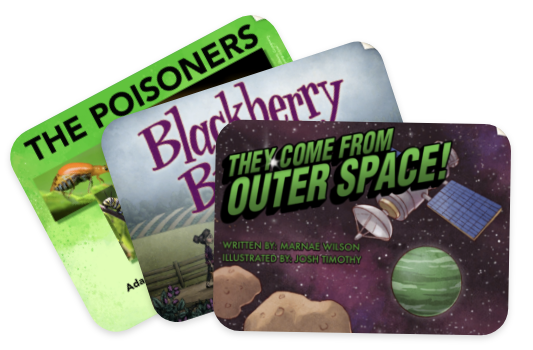
31 new books across grades 2–5 to
add rigorous content

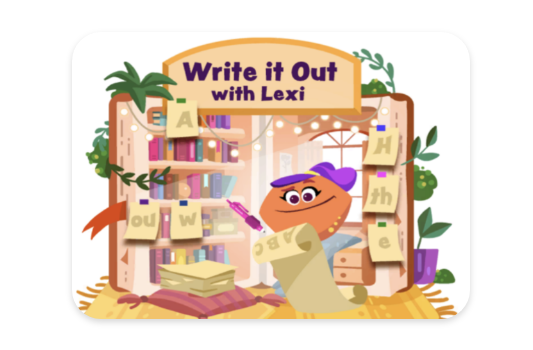
7 new activities that accompany each new book to enhance skills coverage in vocabulary, reading comprehension, speaking, and writing.

These activities have created 11 additional hours of engaging content to help your students succeed.

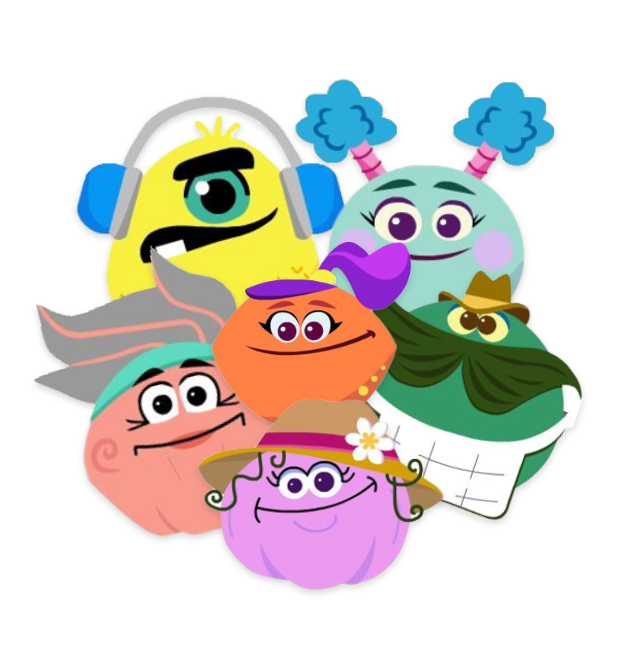
Even more exciting? We have a new theme song with new characters! The Mazels live in different worlds on the shelves of a child’s bedroom. They come to life in the new theme song which gives previews of the new activities students will encounter.

Watch for Yourself

What have we recreated?

Spellball

Now with 3 sports to keep students excited to practice regularly spelled word

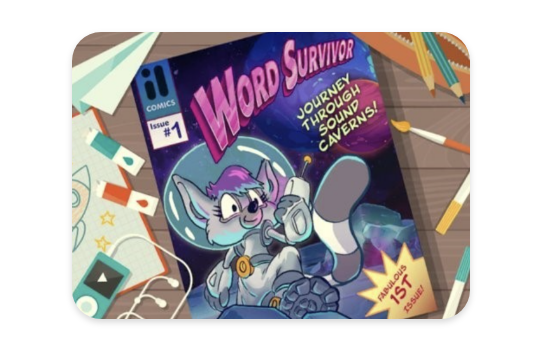
Word Survivor

Newly re-envisioned, this phonological awareness activity now features a fun and colorful spaceship theme!

New and Updated Print Resources:

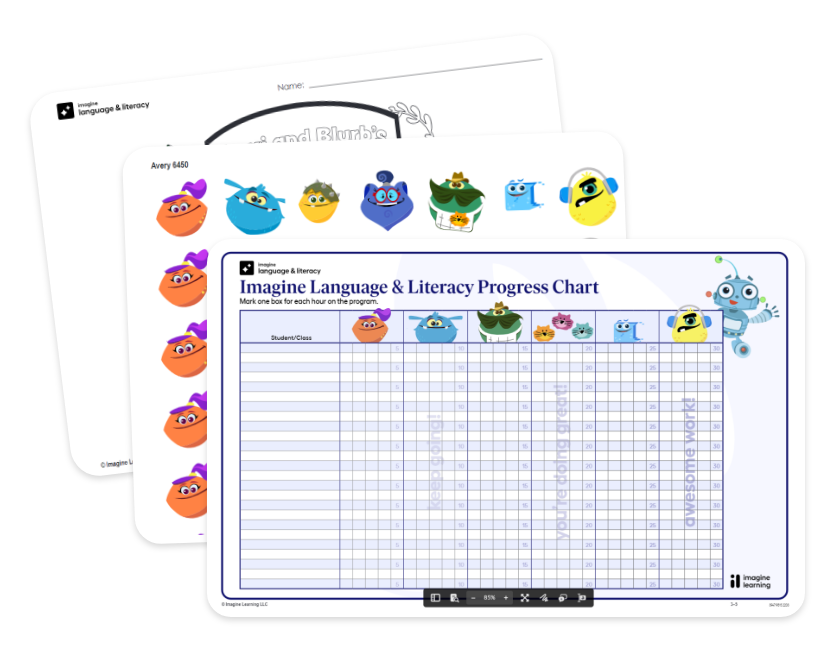
Spark interest and creativity while introducing your students to the new Imagine Language & Literacy characters with new coloring sheets, progress trackers, and printable stickers.

Let students express themselves with their own colorful artwork with the added benefit of fine motor skills practice for younger students. Teachers can use the fun progress trackers and sticker sheets to motivate and engage students in learning.

January 24, 2024 2:07 pm

What’s in store for edtech in 2024? One expert weighs in

Published by: District Administration

AI will transform how teachers teach and students learn… For AI to be developed effectively, however, it must leverage a foundation of high-quality digital curricula to build trust with educators and school leaders, who must first believe in this technology for it to have a meaningful impact.

Read Full Article

May include subscriber-only content

January 24, 2024 6:00 am

Navigating Career Pathways: The Unseen Value of CTE Programs

Career and technical education (CTE) programs serve as a critical bridge for high school students, offering them the flexibility to pursue higher education, dive directly into the workforce with a competitive edge, or even explore and pivot away from career paths they find less aligned with their interests — saving them time and money while offering them boundless opportunities.

The Game of Life board game really made it seem like the choice between starting with college or starting with a career was the most important decision you could make. It was black or white — start with college and have a chance at a “good job” or start with career and have much fewer opportunities. (In reality, either option could lead to the coveted $100,000 salary… but don’t tell 8-year-old me that.)

While the board game’s ties to real life were flimsy, this fictitious dilemma brings up a real-world misconception: that after high school you could either go to college or start a low-skilled job. Luckily, career and technical education (CTE) courses add so many more choices for today’s graduates. CTE’s unique blend of practical learning, hands-on experience, and direct industry relevance equips students with the skills necessary to navigate the complexities of the modern workforce.

The focused nature of CTE

The essence of CTE lies in its ability to tailor education to specific career paths, providing a clear, direct line from classroom learning to real-world application. This is a sentiment echoed by educators deeply embedded in the field. Connie Craven, a dedicated CTE teacher with Imagine School Services, highlights the focused nature of CTE courses: “I enjoy teaching CTE classes because they are more specific to a field or career rather than just a generalization. This can help students really see if that is a pathway they would want to pursue, saving them time and money in the future.”

“This can help students really see if that is a pathway they would want to pursue, saving them time and money in the future.”

Connie Craven

CTE Teacher, Imagine School Services

Craven’s observation underscores a crucial benefit of CTE — its capacity to help students make informed decisions about their futures, potentially averting unnecessary educational expenses and detours. This pragmatic approach to learning is not just about imparting knowledge; it’s about fostering a sense of direction and purpose. In fact, research shows that the average high school graduation rate of CTE concentrators (students who take more than one CTE course in the same field) is 96%, as compared to the national rate of 85%.

96%

High school graduation rate of CTE concentrators (students who take more than one CTE course in the same field)

Exploration and adaptability

CTE empowers students to explore a range of careers before making a significant commitment to a specific path. This exploration is invaluable, allowing students to discover what truly motivates them and what does not, thus saving time, money, and potential dissatisfaction in the long run. The adaptability and breadth of options available through CTE underscore its critical role in helping students carve out successful, fulfilling careers, whether that means further academic pursuits, immediate employment, or a completely new direction after gaining hands-on experience. Regardless of the path they choose, data shows that “eight years after their expected graduation date, students who focused on career and technical education (CTE) courses while in high school had higher median annual earnings than students who did not focus on CTE.”

Kathy Colquitt, CTE teacher with Imagine School Services, shares her journey through the CTE landscape, from her initial spark of interest in international relations prompted by a teaching opportunity, to the internships and coursework that solidified her career path. “The CTE pathway helped me define my career and pursue degrees in business and international business,” Colquitt reflects. Her story exemplifies the transformative power of CTE, illustrating how targeted educational experiences can shape a student’s academic and professional trajectory.

Preparing for tomorrow’s careers

CTE courses stand apart from traditional education models by offering immersive, applied learning experiences that bridge the gap between theoretical knowledge and practical application. Colquitt elaborates on the unique offerings of CTE, stating, “CTE courses provide students with the ability to apply what they have learned within traditional courses into an environment that helps them explore their interests and further develop research and critical thinking skills.” This emphasis on application, coupled with the integration of ethical considerations, prepares students for the realities of the workplace in a way that traditional education often cannot.

Through its focus on specialized skills, practical experience, and direct industry relevance, CTE not only prepares students for the jobs of today but empowers them to shape the careers of tomorrow. As we look to the future, the role of CTE in fostering innovation, driving economic growth, and enhancing workforce readiness will undoubtedly continue to grow, making it an essential element of our collective educational strategy. So, instead of choosing between “start with college” and “start with career,” graduates leave high school on the right path for them.

Help students ignite their passions and find their paths

Get Started

January 23, 2024 8:00 am

Summer Learning: Put Students in the Driver’s Seat 

Transform summer school from a chore to a launchpad for success. Discover four dynamic strategies to engage and motivate middle and high schoolers, fostering a sense of ownership and excitement on their educational journey back to school in the fall.

As summer rolls in, middle and high school students are often focused on sun, fun, and forgetting school even exists! That’s why summer school is a tough sell, even (and sometimes especially) for those students who must recover credits to graduate. So how do we get students excited about summer learning? Empower them with agency. 

We know that summer school can get students back on track, maintain their momentum for fall, or get them ahead. Getting students to feel inspired by these possibilities requires them to feel a sense of responsibility for their own education. Here are four ways to give students ownership of their learning: 

1. Help them understand the destination 

If students can understand why they’re there and how this will benefit them, it will help with their motivation. Students want to know why they are tasked with an assignment — so whether they’re there to recover credits they missed during the school year, work on challenging concepts, or just trying to get ahead, once they know the destination, they can focus on achieving their goals. 

2. Set up a roadmap 

Once students understand their overall destination in summer school (credit recovery, concept recovery, getting ahead), they should set manageable goals that will be their roadmap to success. The key to this goal setting exercise is that they are easily attainable. For example, “I will work on my math course for two hours a day.” Once students begin to meet these goals, they will continue to be motivated and feel that their overall success is achievable.  

3. Identify the checkpoints  

Once goals are set, help students develop a system for checking in on their own progress. Help them understand the importance of checking in on their progress. This helps them establish ownership of their learning and ensure they are on track for course completion. Teachers and administrators often have their own goals for their students, but it is also important that students remain invested in their progress and learning as well. 

4. Make time for celebration 

Last, but most certainly not least, make sure to celebrate success along the way. While it is easy to celebrate the big milestones like completing a unit or course, those will be fewer and farther in between. If you wait for those big moments, students could begin to lose sight of the finish line. Making sure to celebrate things like completing a lesson or even just completing the time goal they set for that day can be a great way to ensure students celebrate themselves and feel that their effort is acknowledged. 

From recovering last year’s English credits to revisiting algebra concepts in preparation for fall geometry, summer school success is going to look different for every student and classroom. But whatever the course, if students feel like they are the owners of their learning, that success will carry them through the academic year too.  

learn More

About the Author – Alyssa Osorio

Alyssa Osorio is the Product Marketing Manager for Courseware at Imagine Learning. Prior to joining Imagine Learning, she was a 7th and 8th grade English Language Arts teacher and Subject Area Leader. In her time as an educator, she also worked in summer school and credit recovery positions with the goal of motivating and empowering students to take pride and ownership of their learning and success. 

December 6, 2023 11:15 am

Innovating Computer Science to Close the Gender Gap

Imagine Robotify’s new advanced Python course furthers the program’s commitment to equity, engaging students in ways that close computer science’s gender gap.

Computer science education is on the rise, with several states adopting it as a high school graduation requirement so far. But even as it gains momentum nationwide, female students still lag behind their male peers in enrollment and persistence. This troubling gender gap emerges as early as elementary school, with girls reporting less confidence and interest in computer science compared to boys.

If current trends continue, the tech workforce will remain predominantly male.

teacher observing students working together

To build a more equitable future, we need creative solutions that empower all students to see themselves as capable computer scientists. A compelling computer science curriculum, designed intentionally to engage girls as much as boys, can help close persistent gender gaps.

That’s why Imagine Learning has added an exciting new advanced Python course to our supplemental computer science program, Imagine Robotify, expanding our library of scaffolded coding content for grades 3–8.

In the new course, students will learn to code an interactive robot named Flex. Their Python programs will help Flex support park rangers as they prepare for a prescribed burn in a nearby forest. Students use geometry, sensors, algorithms, and other key computer science concepts to locate animals, clear debris, and contain the burn area. Along the way, they’ll reinforce related math skills like the Pythagorean theorem.

With its interdisciplinary storyline and coding challenges, this course highlights how computer science enables creative problem-solving across subjects, and students get to pilot a relatable robot character, making computer science engaging, collaborative, and accessible.

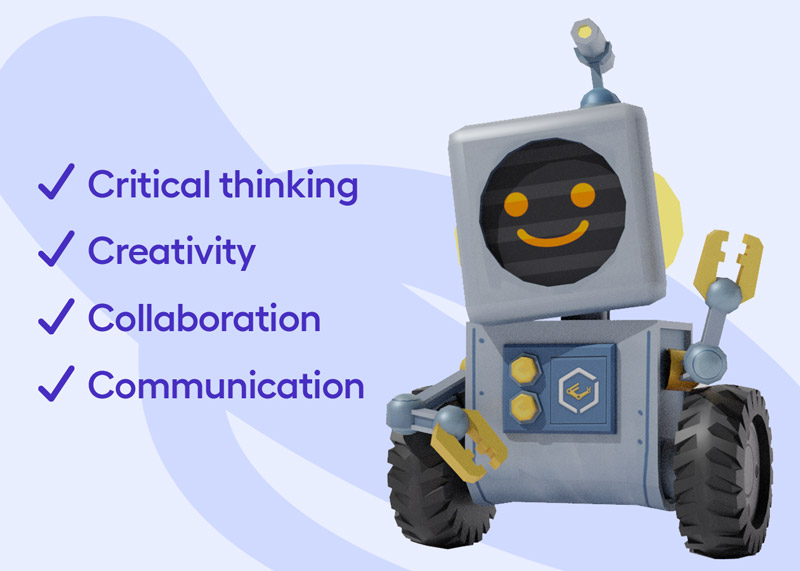
The course reinforces the “4Cs” of 21st-century learning: critical thinking, communication, collaboration, and creativity. Students develop perseverance and computational thinking as they refine their code. The real-world narrative promotes curiosity in science and sustainability, and by working to protect the forest and its inhabitants, students see how computing can positively impact communities and the planet.

teacher observing students working together

An equitable computer science curriculum can inspire all students, especially girls, through innovation. That’s why, in addition to new courses like this one, Imagine Learning has completely redesigned the educator experience in Imagine Robotify: the instructional model provides more differentiated instruction, added supports for new computer science teachers, and built-in opportunities for unplugged activities to complement the coding experience.

Computer science education is gaining momentum, but persistent gaps remain when it comes to engaging female students. Compelling, cross-disciplinary computer science courses can help close these gaps, and high-quality curriculum and instruction will be key to driving broad, equitable engagement.

We’re excited to keep enhancing Imagine Robotify’s courses and teacher supports to promote equity and access, and we can’t wait for students to begin coding alongside Flex, developing computational thinking skills to take on real-world problems. As computer science education continues to expand, our commitment to quality curriculum and instruction for all learners only grows.

Bring coding to life in your classroom