Support | About Us | Careers | Events & Promos | Grants & Funding | Webinars
Monday, December 13, 2010

Why talking in class could help your English learners make even bigger gains

Keep talking! Louder, please. It’s too quiet in here!

You probably don’t find yourself saying things like this to your students very often, but new research on how children acquire second languages might soon have you asking your students to make a little more noise in class.

Neuroscientists at the University of Washington’s Institute for Learning and Brain Sciences, or I-LABS, recently published a study that confirms what educators have long suspected: social engagement is a vital component of language learning. In other words, encouraging your English learners to converse with teachers and students could be the secret weapon you need to help them make some serious gains.

Among other things, the I-LABS study gathered some interesting data on how babies learn to recognize sounds in a second language. In the study, American babies born to English-speaking parents were exposed to a second language, either through playing with a native-speaking tutor three times each week or by listening to and watching audio and video recordings of native speakers. At the end of the study, data showed that infants who interacted with a native-speaking tutor had made significant progress in recognizing sounds from the second language. Babies who had only been exposed to audio and video recordings had made no progress whatsoever in recognizing the second language sounds.

So what does this mean for your students? Although the study focused primarily on babies, I-LABS scientists see their results as a confirmation that social interaction is an important piece of the language acquisition puzzle. “Human brains are wired to learn best in social interactions, whether that learning is about language or problem-solving or emotion,” explained Gina C. Lebedeva, translation outreach and education director for I-LABS. In other words, conversations and interactions with you and with other students in your class could be just what your English learners need to jump-start their progress.

So while you’ll probably still want to have your students quiet and attentive during class, you might also want to build in some extra time for conversation and interaction. Here are three ideas for getting your students talking:

  • Pair each of your students with a conversation buddy, making sure your English learners have native English-speaking partners.
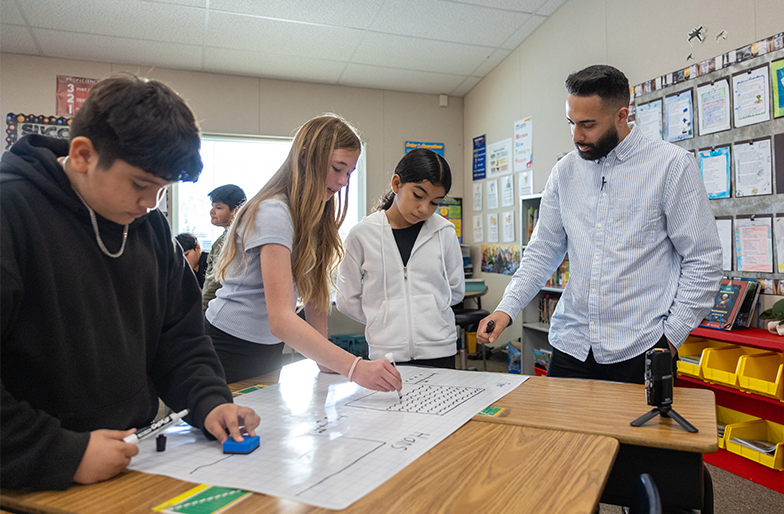
  • Plan group projects that allow students to spend time interacting and working together.
  • Make time to talk with your students one-on-one: this is a simple way to help your English learners engage in conversation and build their language skills.

If your English learners aren’t quite comfortable interacting with others because of their limited language skills, use Imagine Learning English to help them learn and practice conversational phrases. Our chants and conversation activities teach common words and phrases that English learners can use to engage in the kinds of social interactions that will help them learn English—phrases like “Hi, my name is . . .” and “How are you?” You can even have students record themselves using and responding to the phrases to build confidence.

Have you ever tried using social interaction to help your students acquire a new language? Leave a comment telling us what’s worked for you and your students.

Find out how Imagine Learning English can help your English learners develop the conversational skills and the confidence they need to succeed. Contact us today.

One Comment:

  1. This is really good thread. Thanks for sharing. Keep up the good work.

Post a Comment

Fields marked with an asterisk (*) are required.
 
Name:
*
Email:
* (Not Displayed)
Website:


Powered by WordPress